
This was my third time in Stanley. The first was back in 2012, working on an offshore geophysical survey vessel some 200 nautical miles north of the Falkland Islands. Based out of Stanley, that visit added up to a fair few days ashore: while the ship was prepping, again on a supply run, and once more at the end of the survey. The second was in 2023, arriving by cruise ship. So I know the place reasonably well, and walking up from the jetty this time felt a little like coming home.
Not everything was as I left it though. The iconic Globe Tavern appeared to be shut, which was a blow. A quick search since suggests it is being renovated rather than lost altogether, which I very much hope is the case, because I had a memorable night in there at the end of the 2012 survey before flying home and we’d finished our day with a quick pint there in 2023 too. Some pubs earn their place in your memory and that one did.
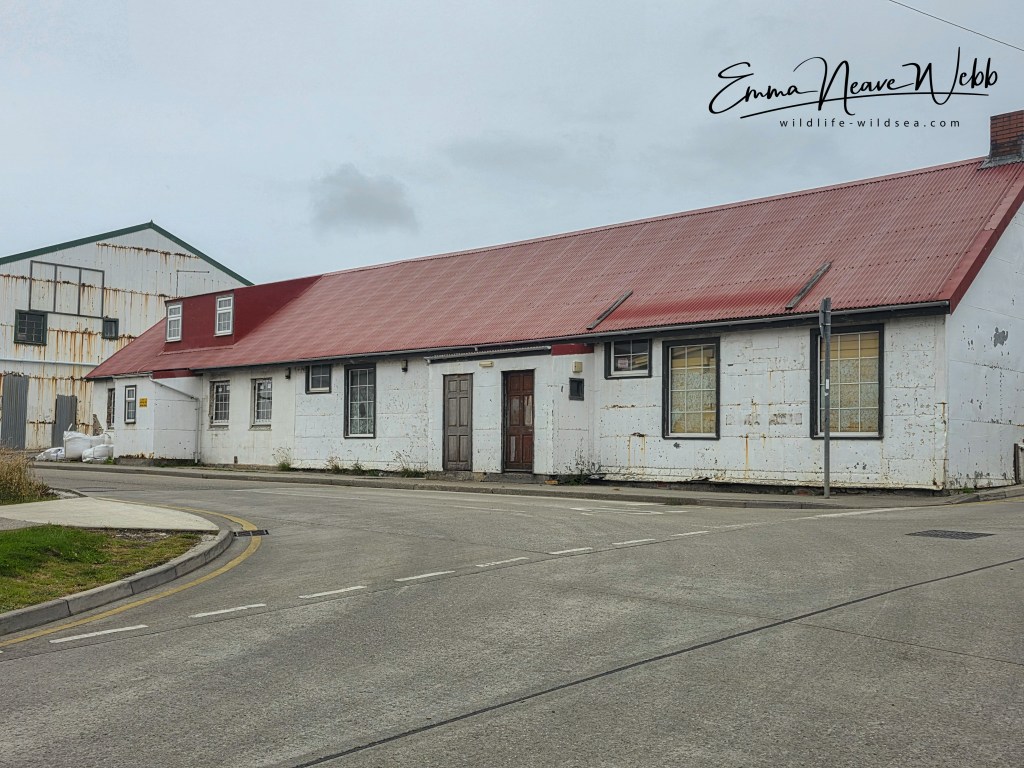
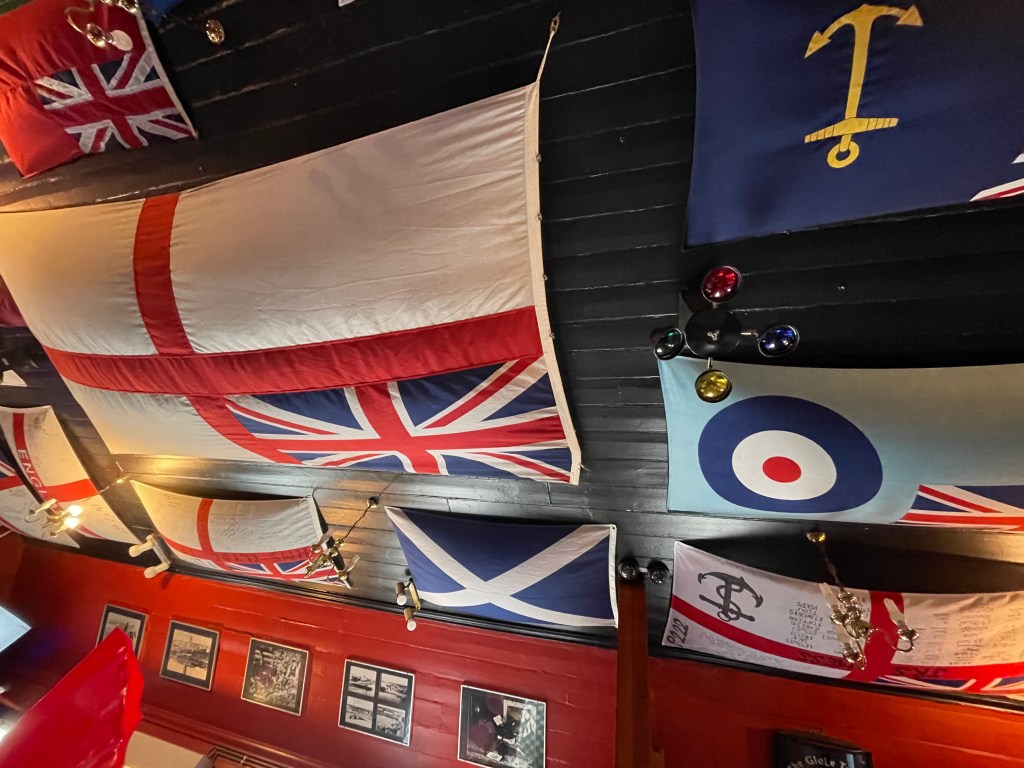
After only a couple of days on the ship Stanley still felt almost metropolitan. Coloured roofs, a road running along the water, and shops. Actual shops, with things in them. This was a last chance to get anything we’d forgotten or stock up on souvenirs so we started as any sensible person would, which is to say by shopping. Stanley does a brisk trade in things you did not know you needed until the moment you saw them, and a good deal of enthusiasm was applied to the task and an awful lot of penguin-related paraphernalia purchased.
After that, the whale bones. We knew there was a collection somewhere in town, in the way you know things exist without having the faintest idea where they are, and Stanley offered no signposts on the subject. The solution arrived in the form of a passing police officer, who was duly flagged down and asked, with more hope than expectation, whether he might know where the whaling museum was. He did. It was in somebody’s garden. Off we went in the increasingly persistent rain.
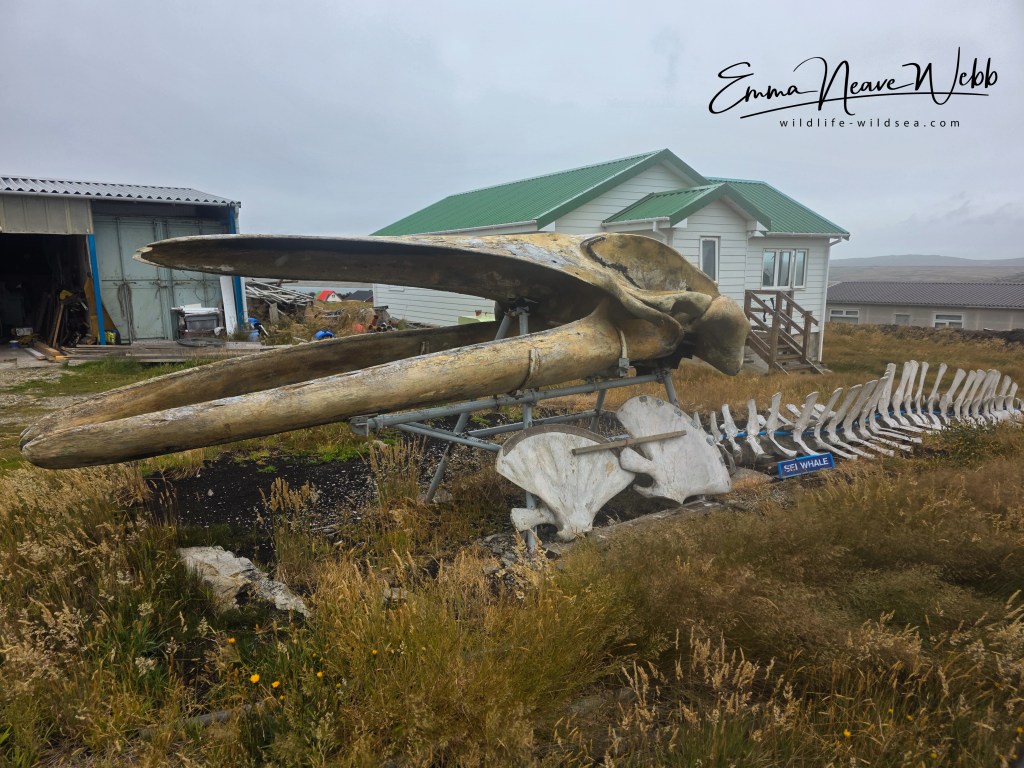
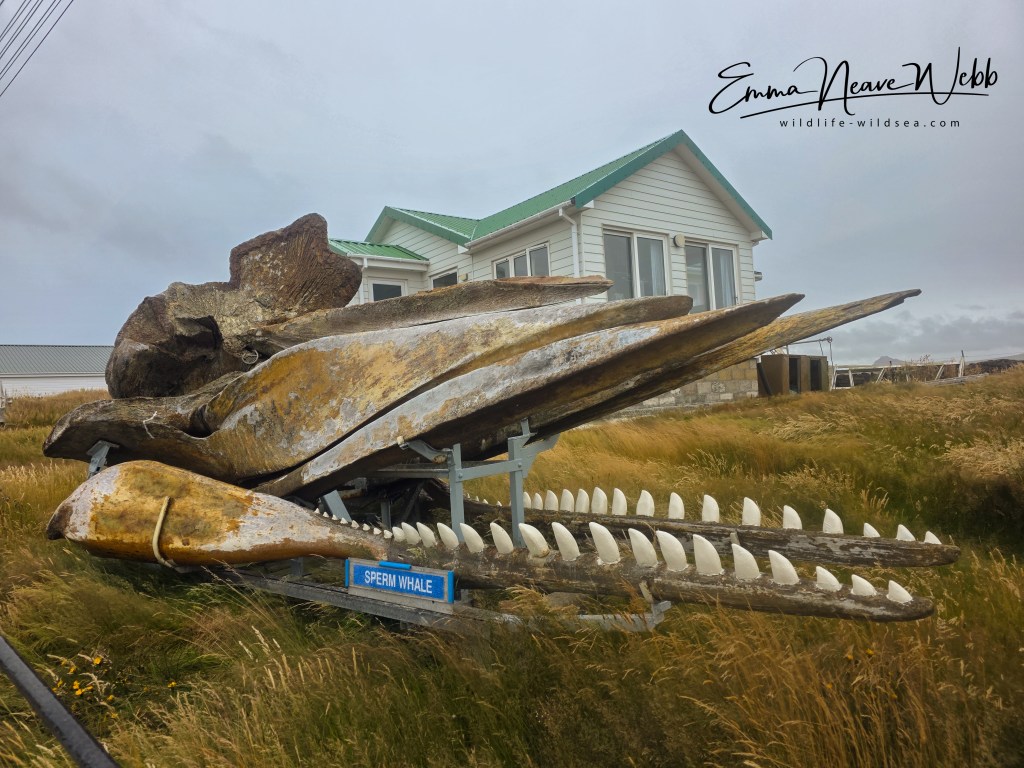
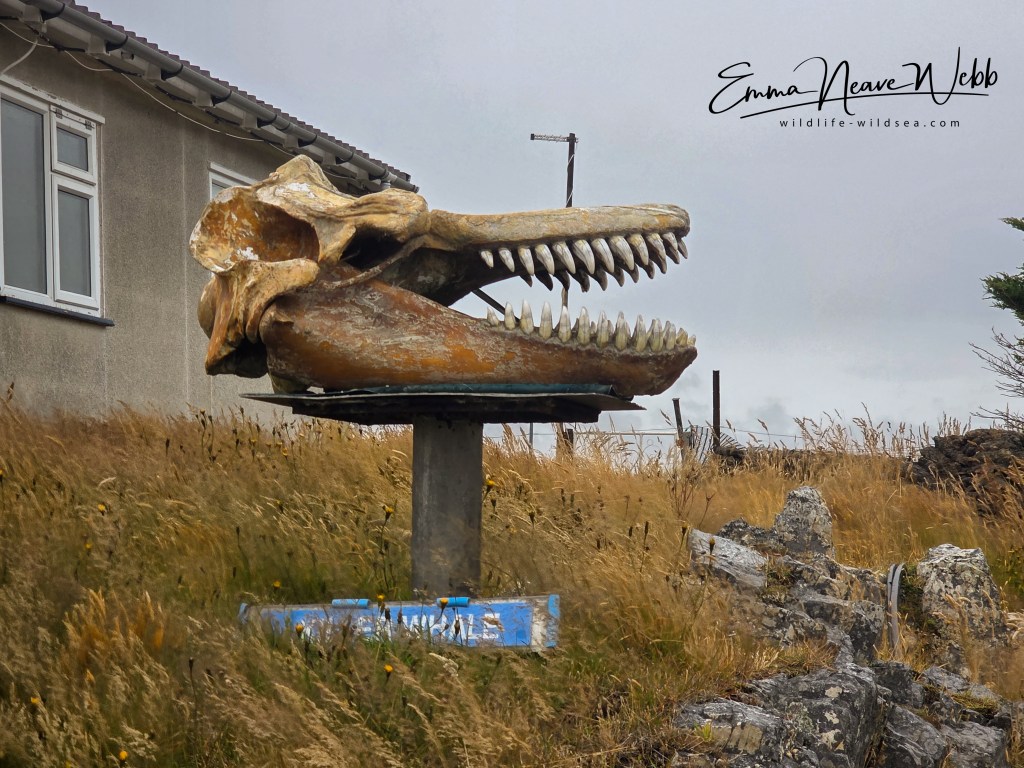
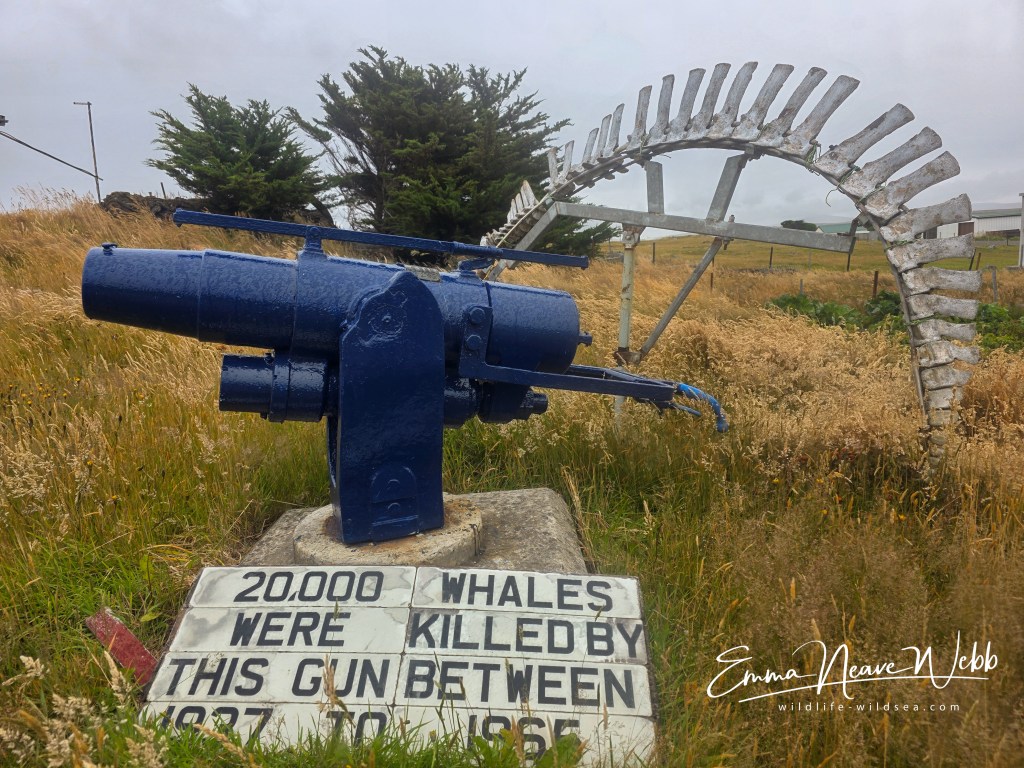
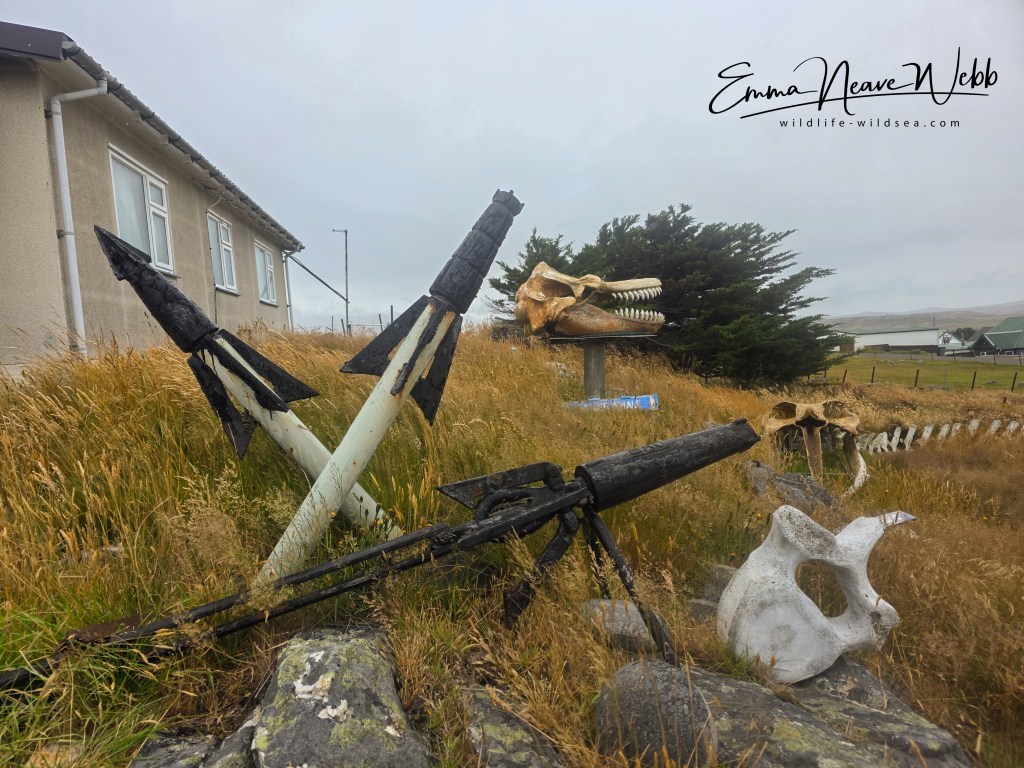
Museum is not quite the word for it. The whalebone display sits on Dairy Paddock Road, laid out on the grass beside a house, visible from the road and open at all hours to anyone who happens along and cares to look. It is the work of Mike Butcher, an anti-whaling campaigner who assembled the skeletons to show these animals at their full magnificence, and that is exactly what it does. Vertebrae, skulls, ribs, the lot. Less an exhibition than a reminder, sitting there in plain sight, of what used to happen in these waters. There is something about bones at that scale seen out of a museum case, simply standing in the weather, that lands rather differently. You can read the measurements for years. Standing next to a vertebra the size of a footstool situated next to a harpoon is another matter entirely.
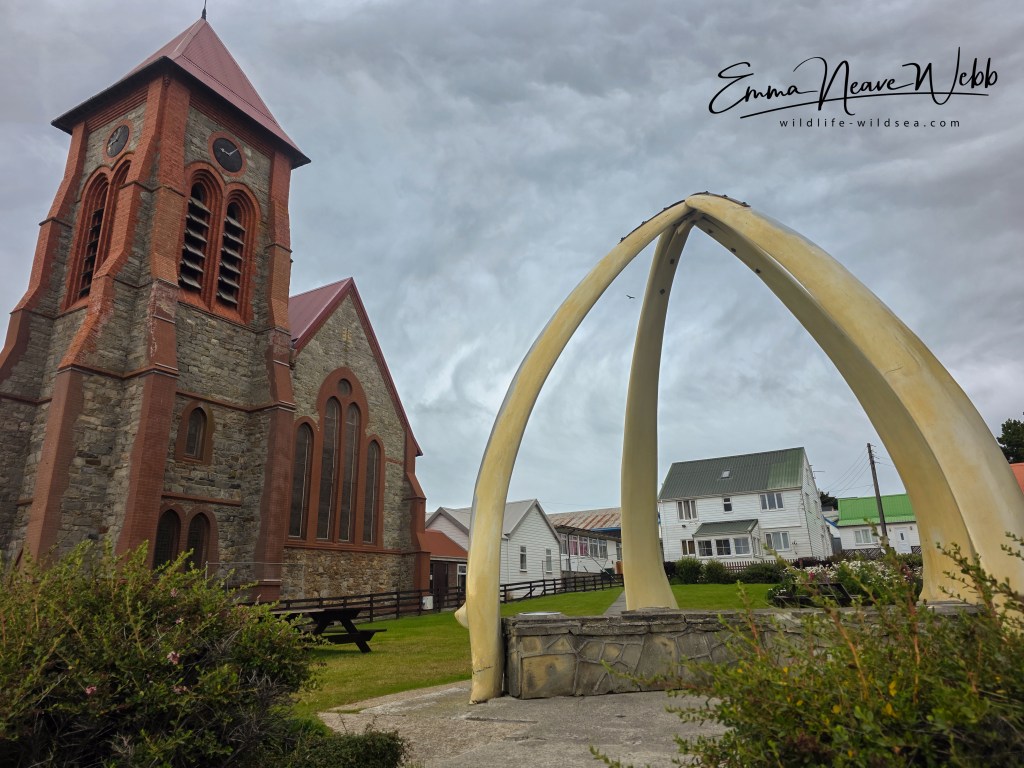
The other set of bones in town is harder to miss. On Arch Green, beside Christ Church Cathedral, stands the whalebone arch: two pairs of jawbones from blue whales (Balaenoptera musculus), brought down from the South Shetland Islands in 1922 by the Hektor Whaling Company as a gift to the Falkland Islands Government, and raised in 1933 to mark a century of continuous British administration. Whitby has one too, which is not a coincidence. Stanley and Whitby have been twinned since 1981, at the suggestion of the then Governor Rex Hunt, in recognition of a whaling history the two towns share.
That history is easy to underestimate if you think of the Falkland Islands as a place at the edge of things. There was a station here, on New Island, built by Christian Salvesen and Company in 1908 and working from January 1909 until 1915, when it was dismantled and most of its equipment shipped off to South Georgia. But the more significant link ran through the paperwork rather than the flensing plan. Letters Patent in 1908 and 1917 gathered South Georgia, the South Sandwich Islands, the South Orkney Islands, the South Shetland Islands and Graham Land together as the Falkland Islands Dependencies, all of it administered from Stanley. Licences were granted here. Catchers were registered here. Somewhere in this small town, in offices facing this same stretch of water, decisions were signed off that shaped the industrial slaughter of the Southern Ocean. Around South Georgia alone, more than 175,000 whales were killed between 1904 and the closure of the last land station in the mid-1960s. South Georgia was to be our next call after Stanley.
I have spent a fair portion of my working life in rooms where whales are discussed in numbers and paragraphs so standing by that garden was a sobering moment, and a stark reminder of what this industry once was, made all the more so by where we were headed next.
We finished at the distillery, which opened just in time for us to try before we bought, which is very much the correct order of things. Falkland Islands Distillers work out of a small operation in town, making small batch gin infused with botanicals picked locally, diddle-dee berries and tea berries and scurvy grass among them. Two bottles came back to the ship with me, Darwin’s Botanicals and South Atlantic Kelper’s, on the reasoning that it would have been rude to choose.
Whether either of them lasted to the end of the trip remained, at that point, very much to be seen.
📍 Stanley, Falkland Islands, 19th February 2026


Leave a Reply