
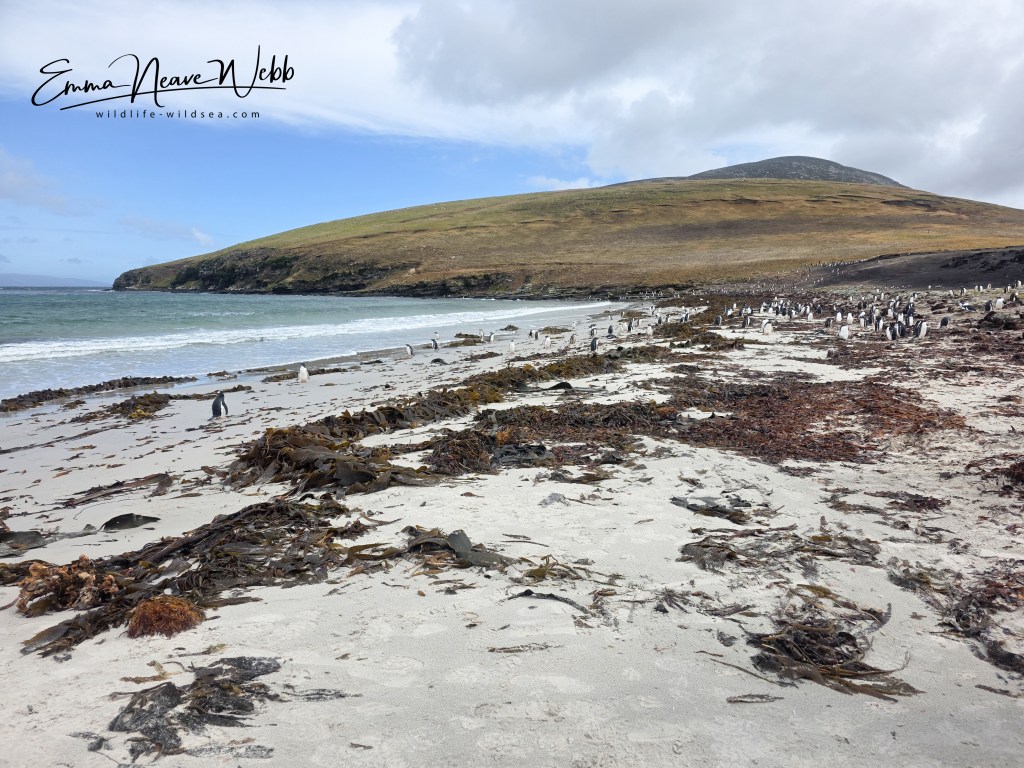
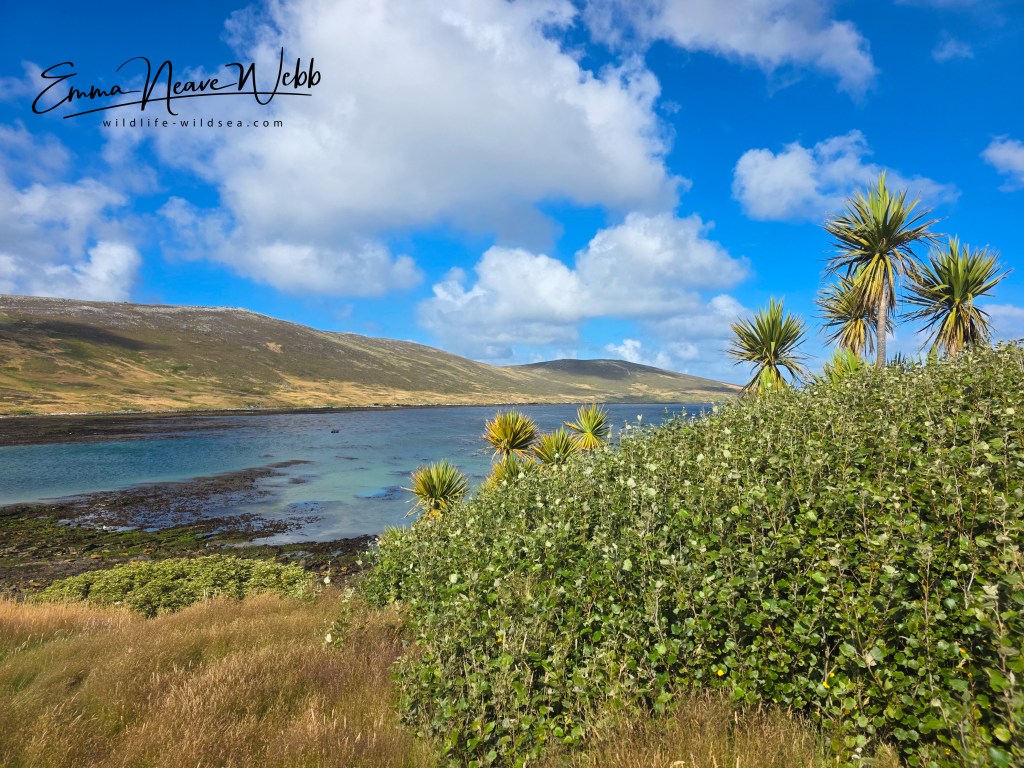
The first sign that something is about to happen is the sound. The steady thrum of the ship’s engines shifts in pitch, and then, from somewhere up at the bow, the anchor chains begin to run. The noise reverberates through the whole vessel, far more dramatic than the reality warrants, but no less exciting for that. You feel every chain link drop, and even before you reach the deck, you know. Land. The Falkland Islands emerging from the South Atlantic: white sand beaches, grey-green hills, low skies and everything shaped and scoured by the sea. For someone from Orkney, there was something immediately, unexpectedly familiar about it. We had arrived at our first stop on the expedition, Saunders Island. This meant only one thing: it was time to kit up to go ashore.
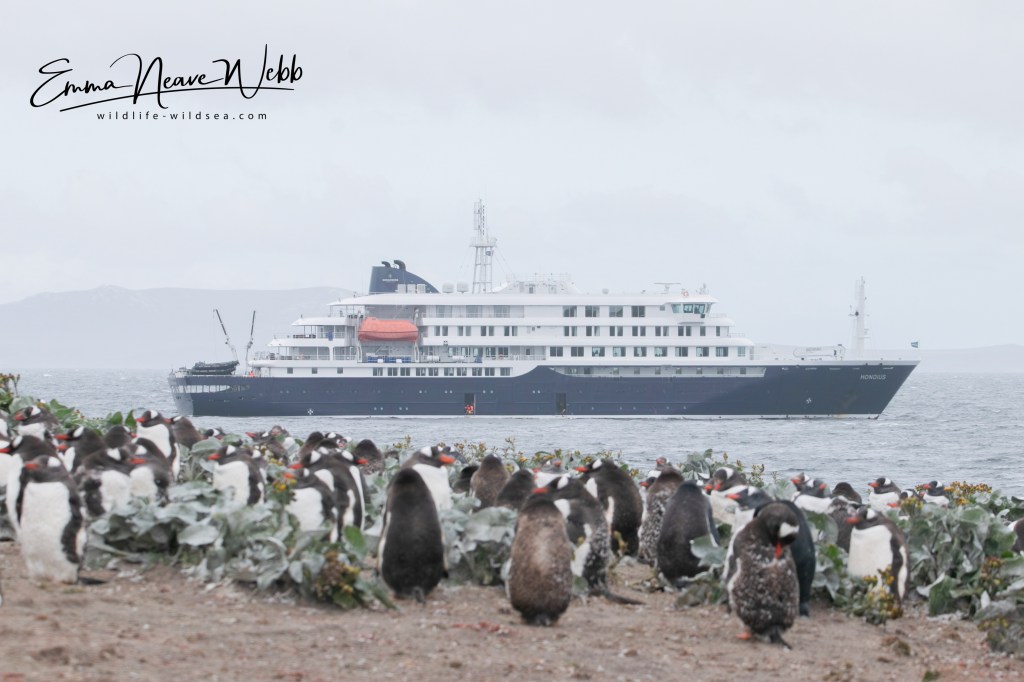
There is something about the first zodiac landing of an expedition that no amount of previous experience quite prepares you for. The kitting up alone is a production: thermal layers, waterproofs, lifejackets, boots, cameras, binoculars, all located, assembled and wrestled into place in a cabin that suddenly seems considerably smaller and much warmer than it did the night before. I can report that this process did not get noticeably easier or faster at any point during the trip but there was considerably more moaning each time.
On deck, the atmosphere was electric. For many of the passengers aboard, this was their first time stepping into a zodiac, and the combination of novelty, anticipation, nerves and the sight of a beach already covered in penguins had produced an energy that was almost impossible to contain. The low rumble of the outboard, the smell of fuel, salt and rubber, the short hop across glittering water with a boatload of people who could not quite believe where they were. The anticipation was almost unbearable, and I say that as someone who has done this before and was no less excited than anyone else.
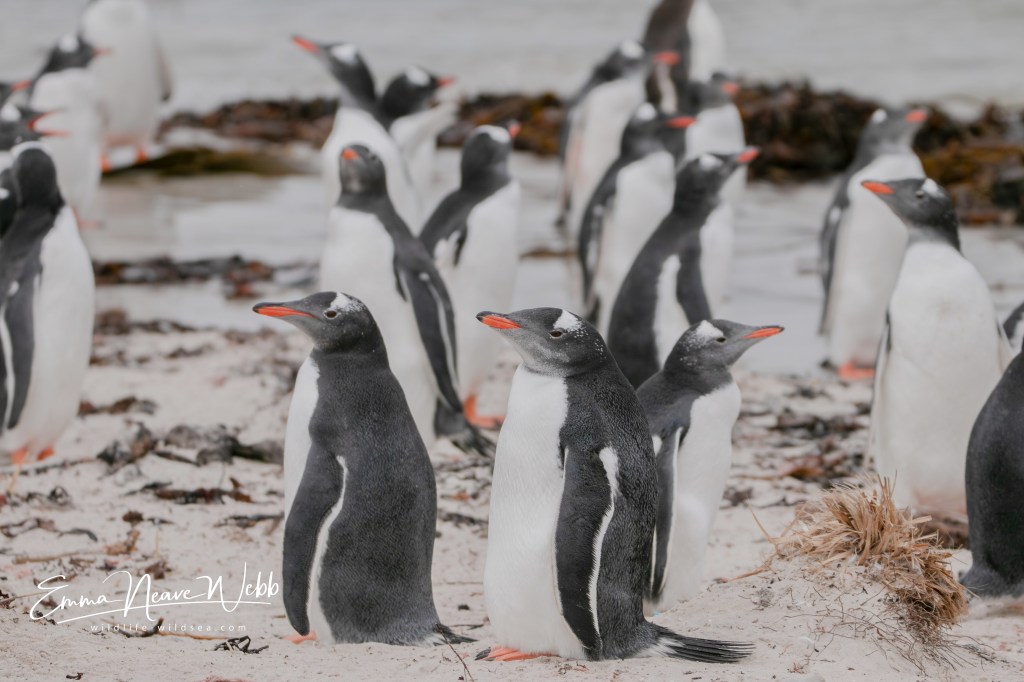
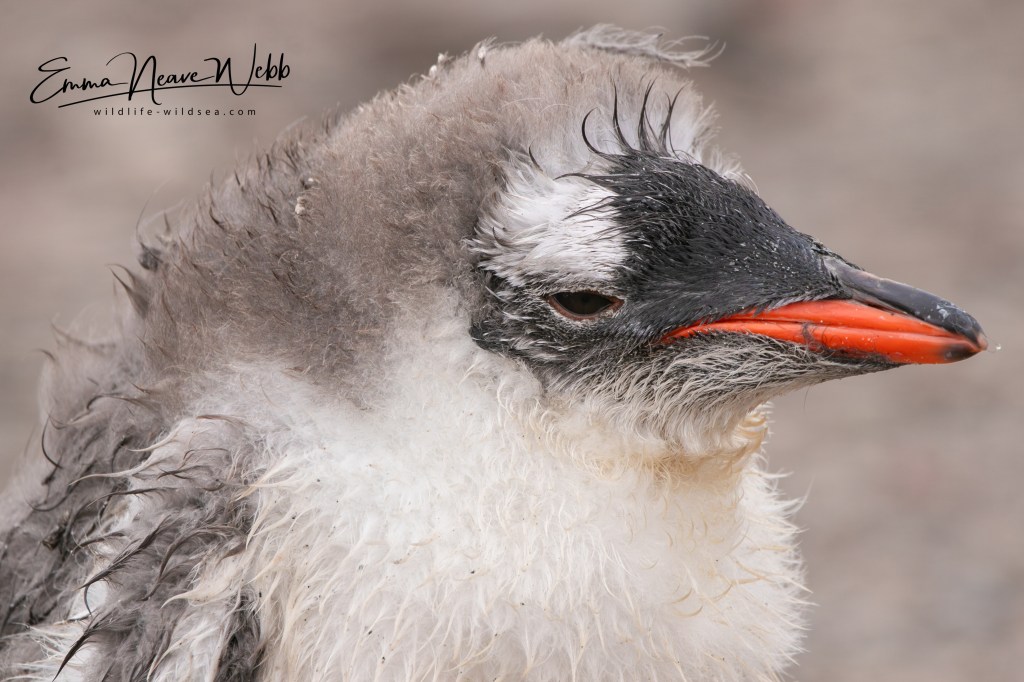
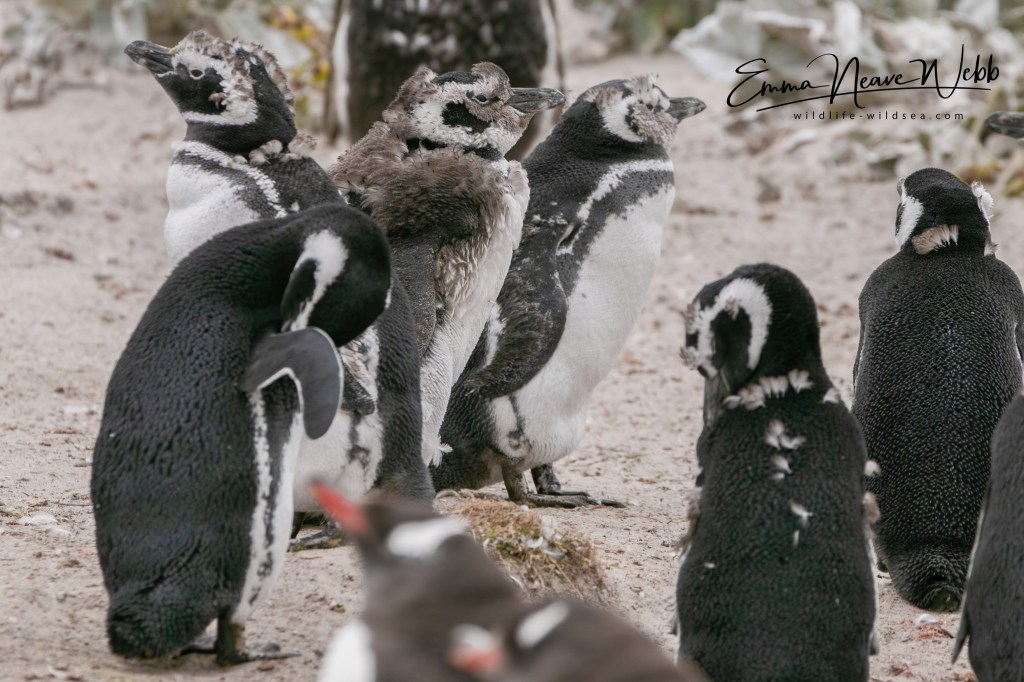
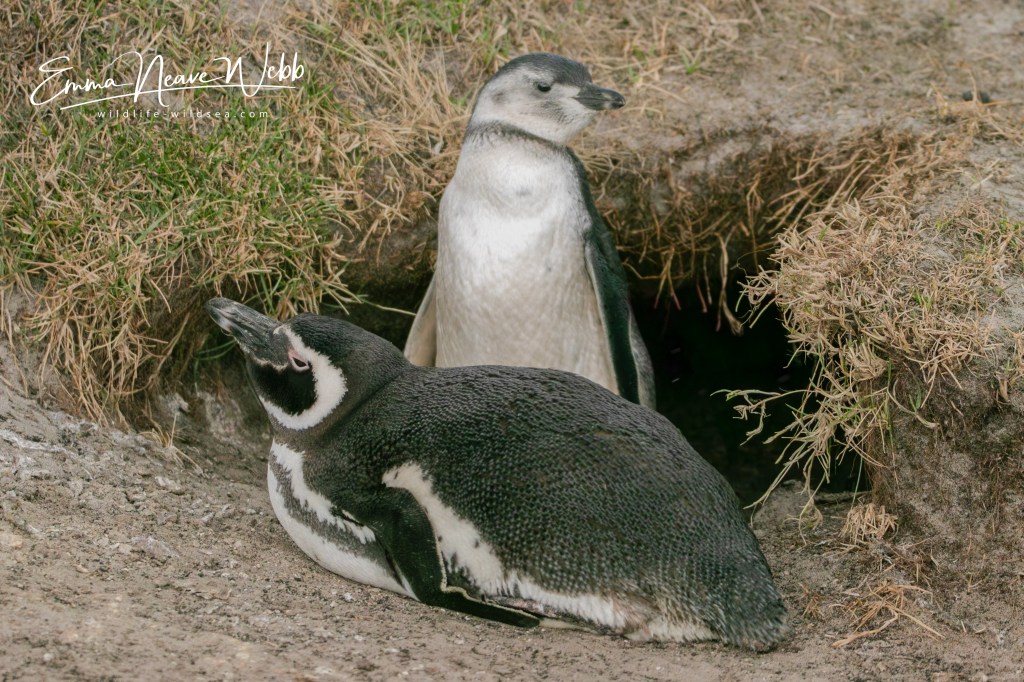
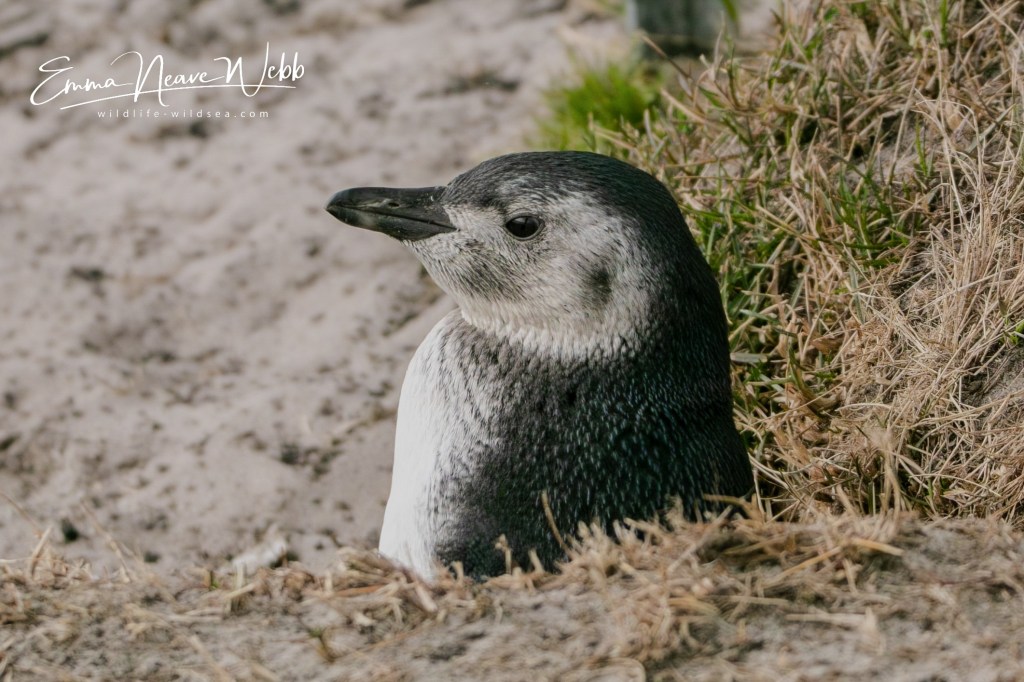
We landed at Saunders Island surrounded by gentoo penguins (Pygoscelis papua), and leaving the beach for the rest of the wildlife further up the island required a degree of willpower that I am not sure we all fully possessed. On the edge of the busy and active gentoo colony, a small group of Magellanic penguins (Spheniscus magellanicus) were doing considerably less. The chicks, in the midst of moulting, had achieved a particular peak of scruffiness and appeared entirely unbothered by this fact, loitering with the air of teenagers who have nowhere to be. It was the only time on the entire expedition that we encountered Magellanic penguins on land.
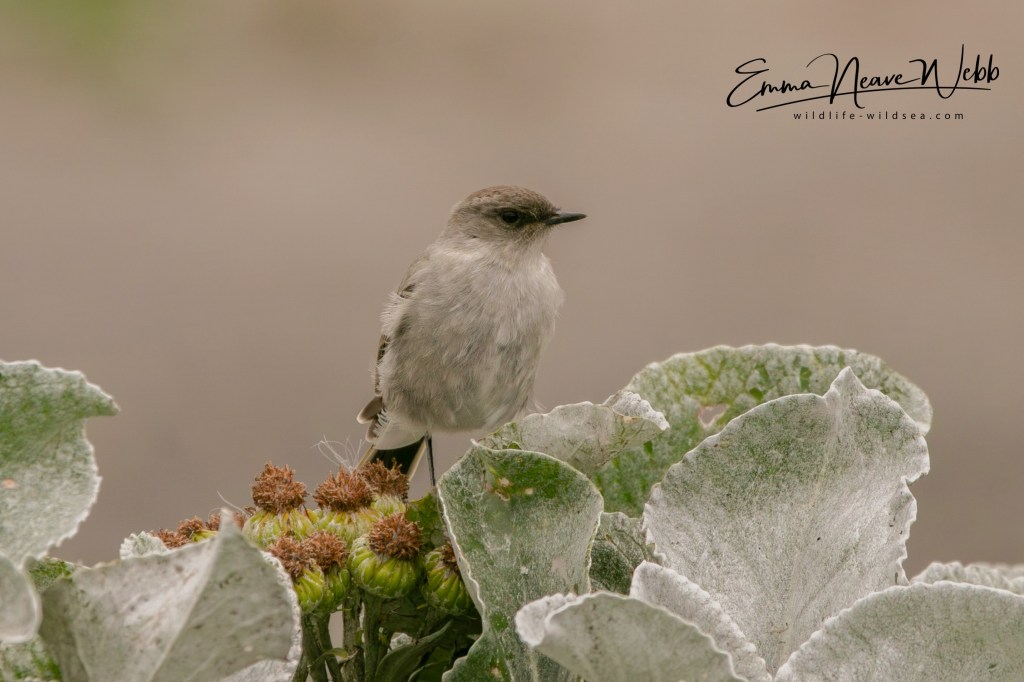
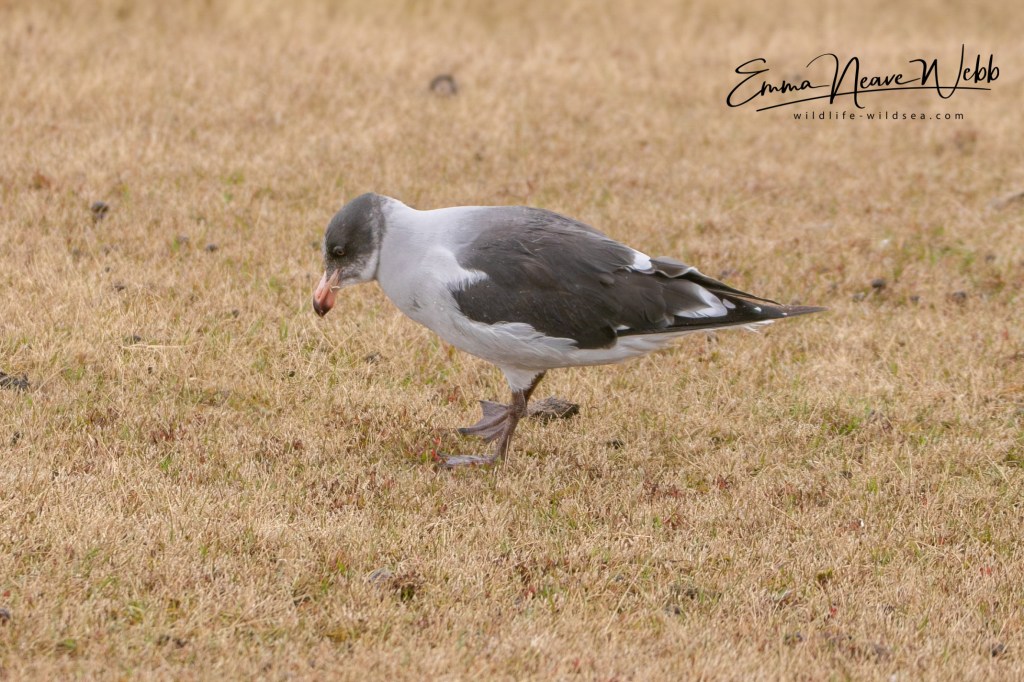
A dark-faced ground-tyrant (Muscisaxicola maclovianus) showed briefly , easily overlooked amongst the chaos of everything else but well worth a second look. Dolphin gulls (Leucophaeus scoresbii), vivid red-billed and by far the prettiest of any gull I’ve seen, worked the shoreline and rough grazing land.
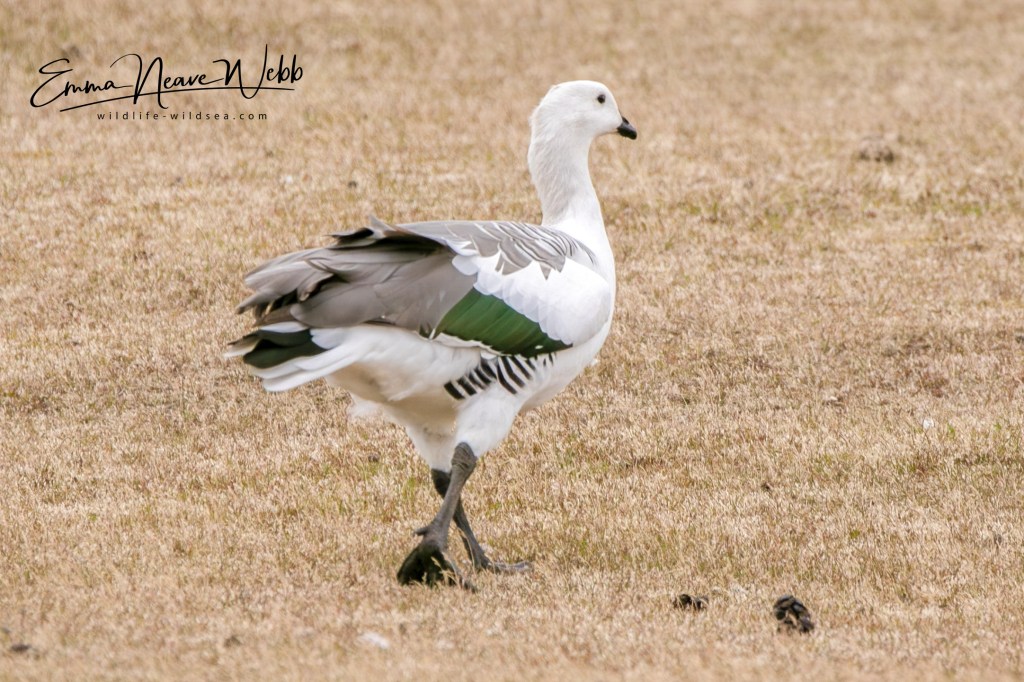
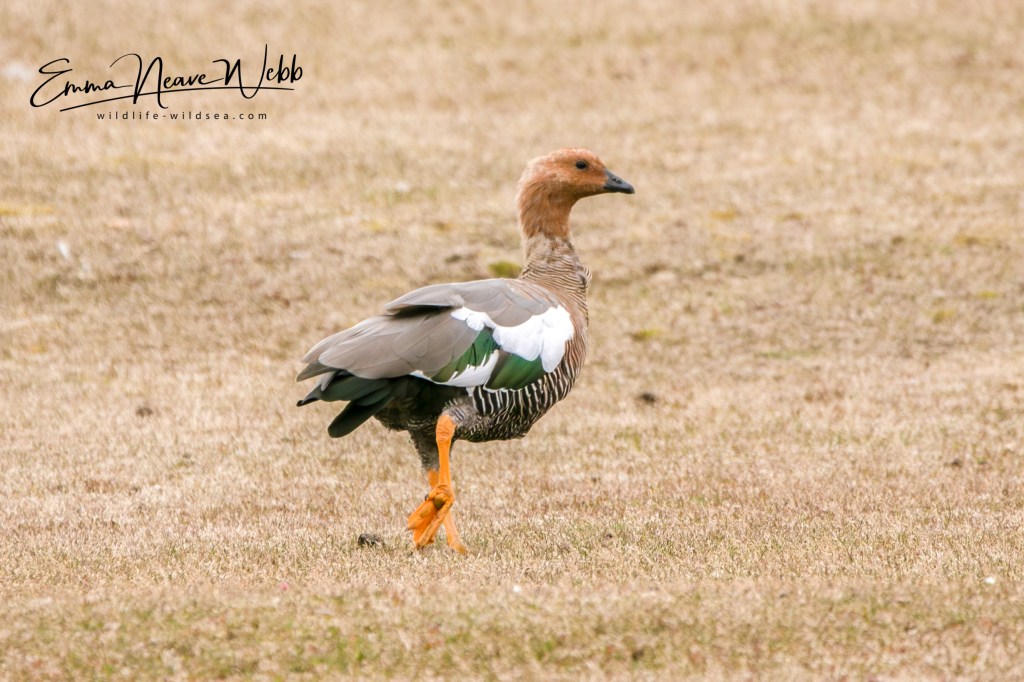
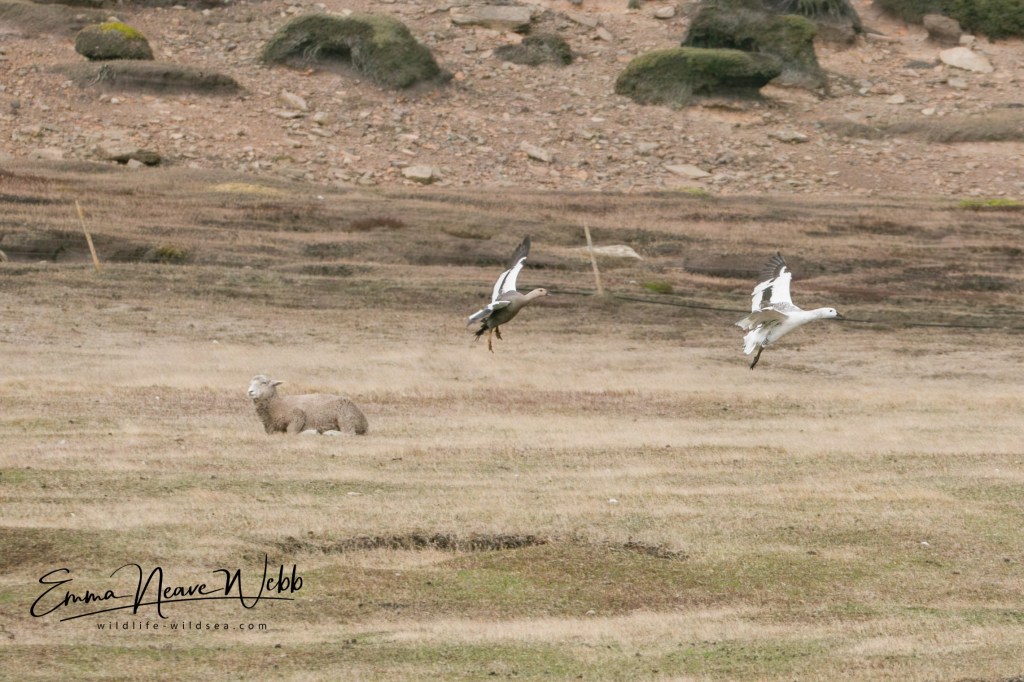
Many more photographs later, we tore ourselves away and headed further up the island, past grazing land where upland geese (Chloephaga picta) moved steadily amongst the famous Falkland Islands sheep.
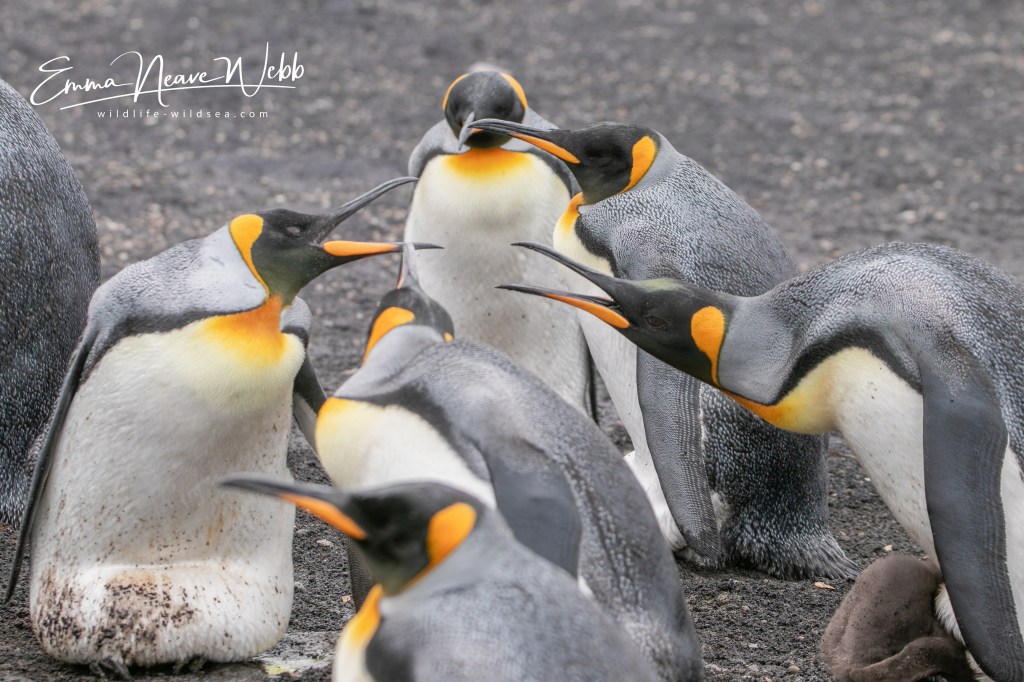
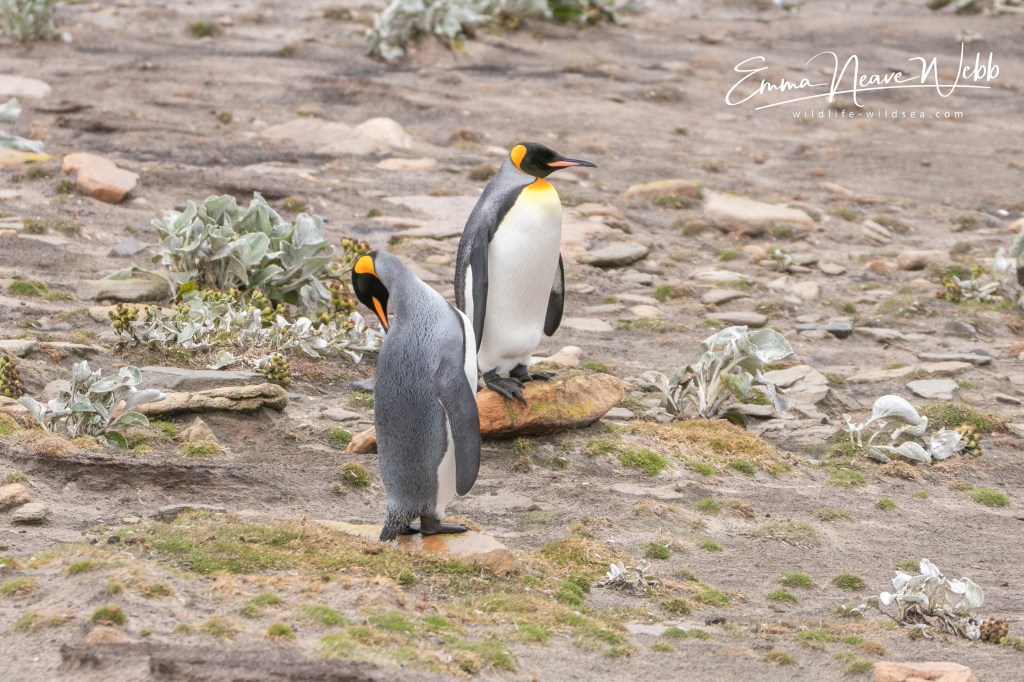
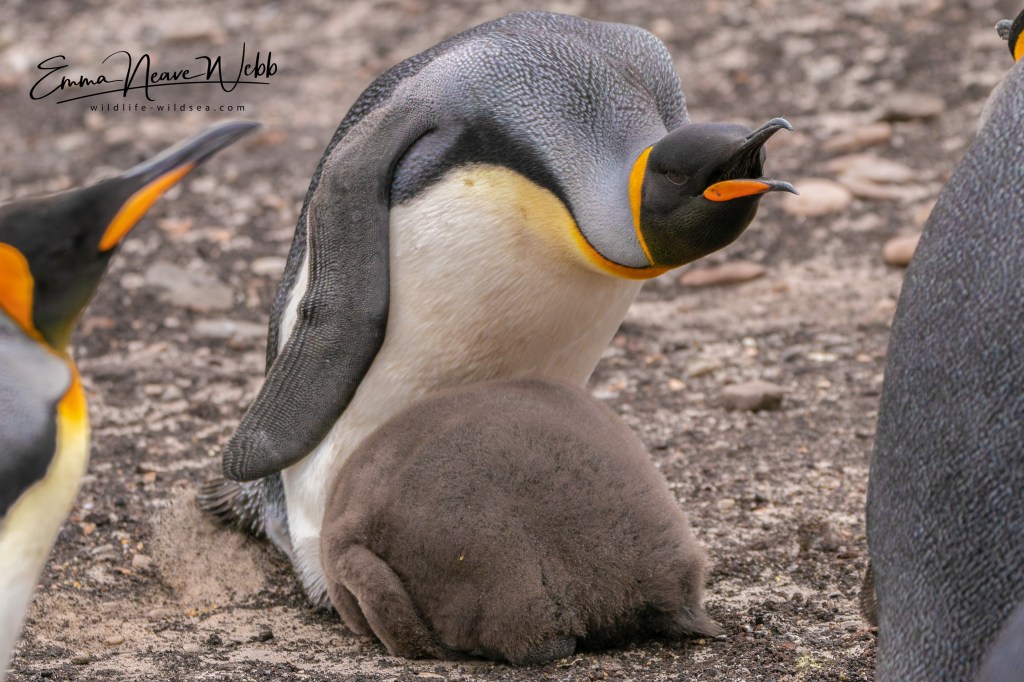
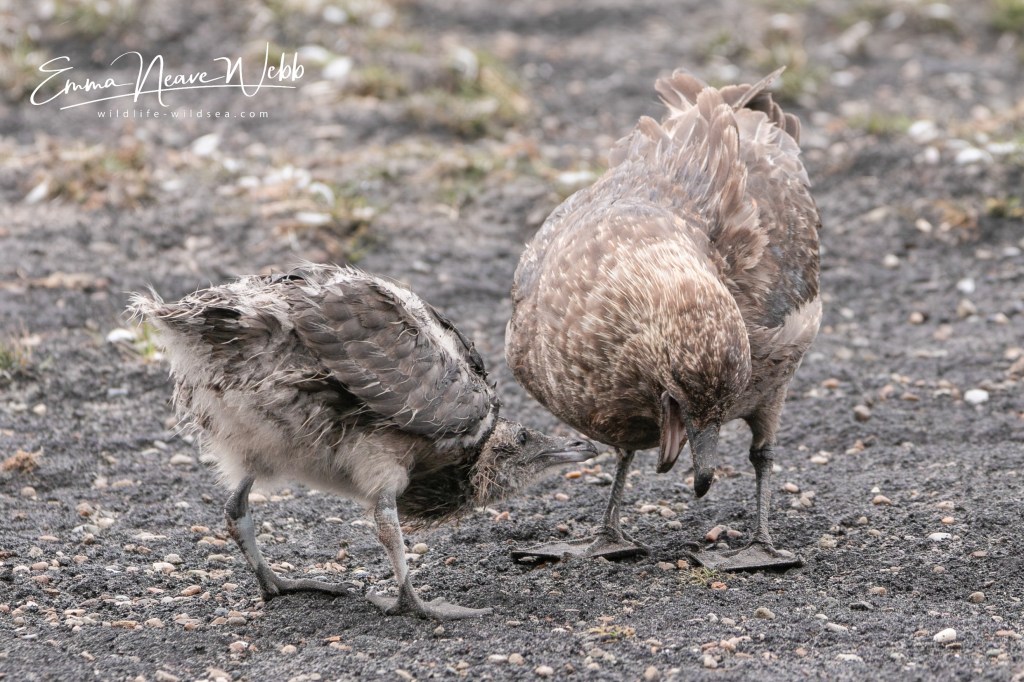
We paused for a (long) while at a small king penguin (Aptenodytes patagonicus) colony that felt like a quiet (although there is nothing quiet about a king penguin colony no matter how small it is) preview of South Georgia to come. A few pairs of Falkland skuas (Stercorarius antarcticus) were in attendance, including chicks, keeping a watchful eye on proceedings with that characteristic air of skua menace.
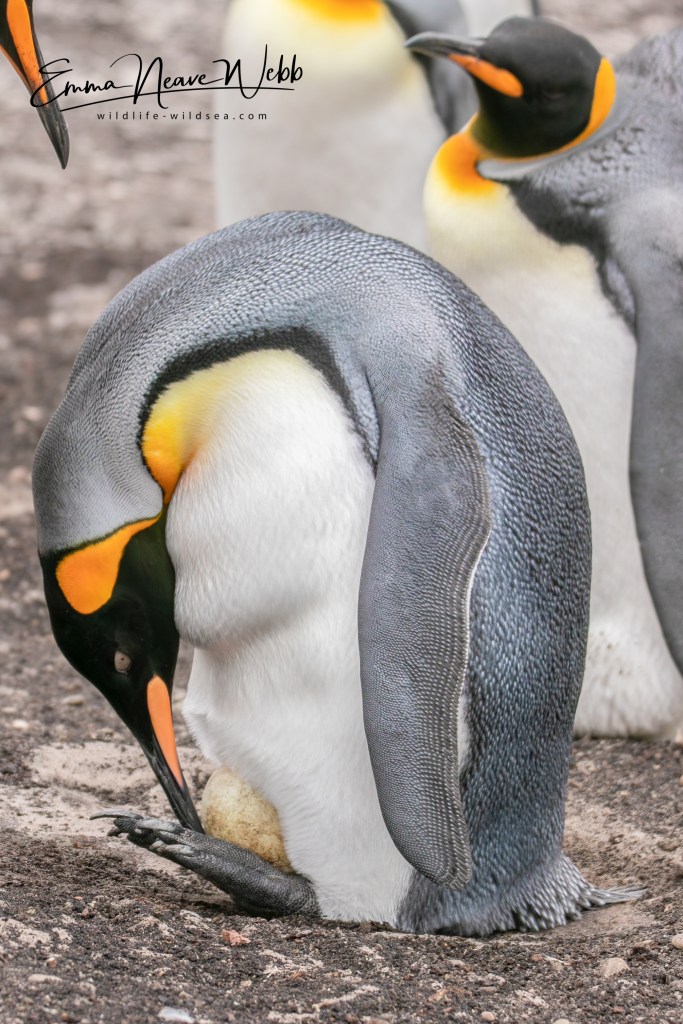
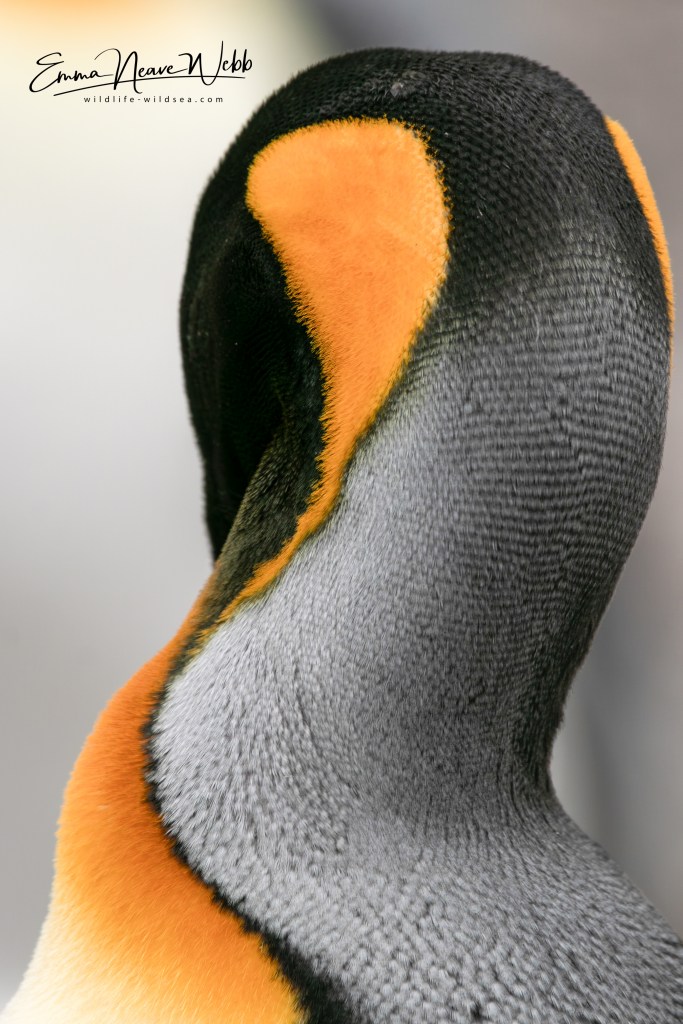
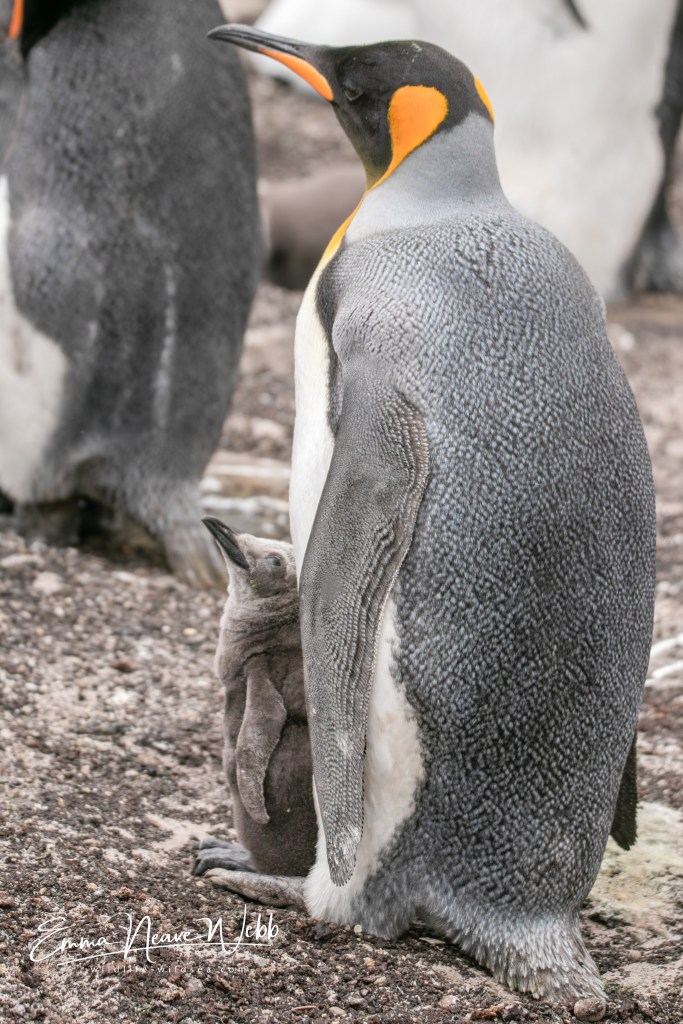
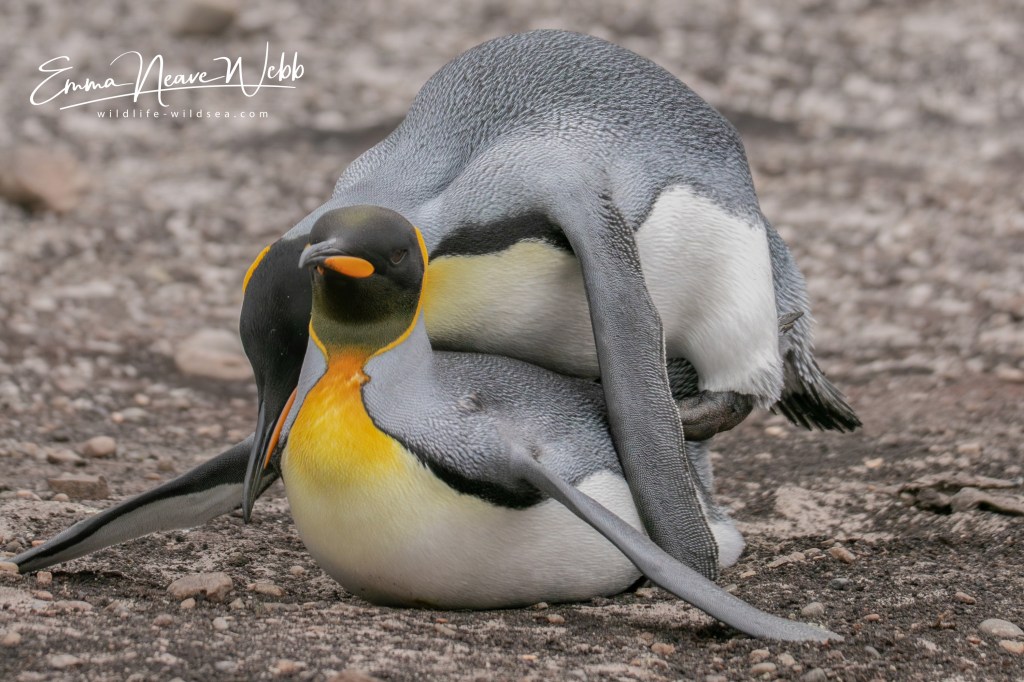
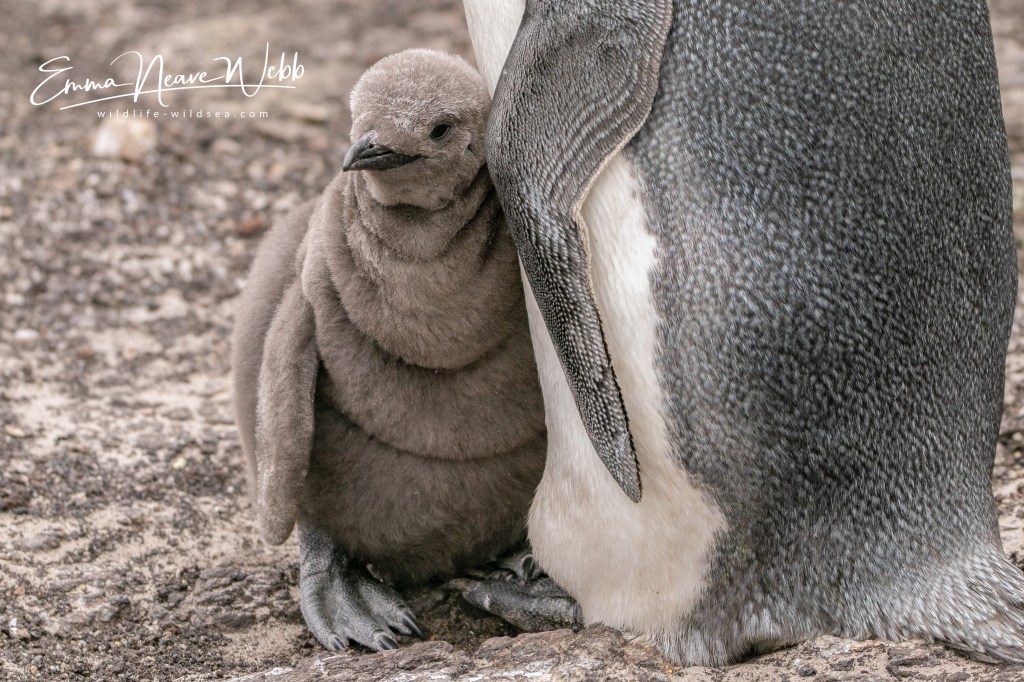
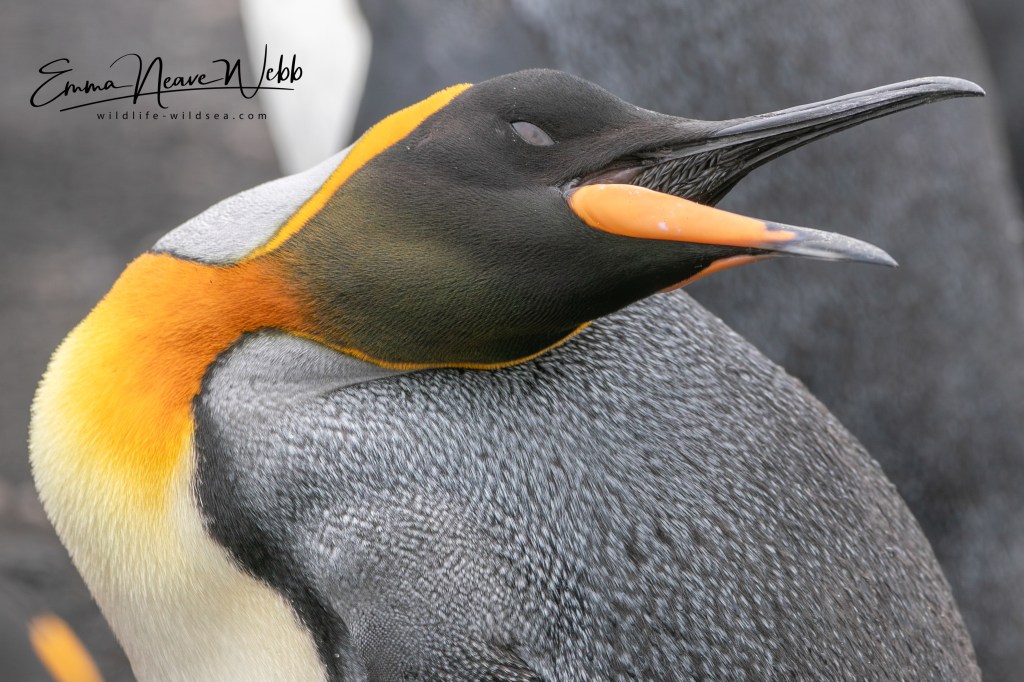
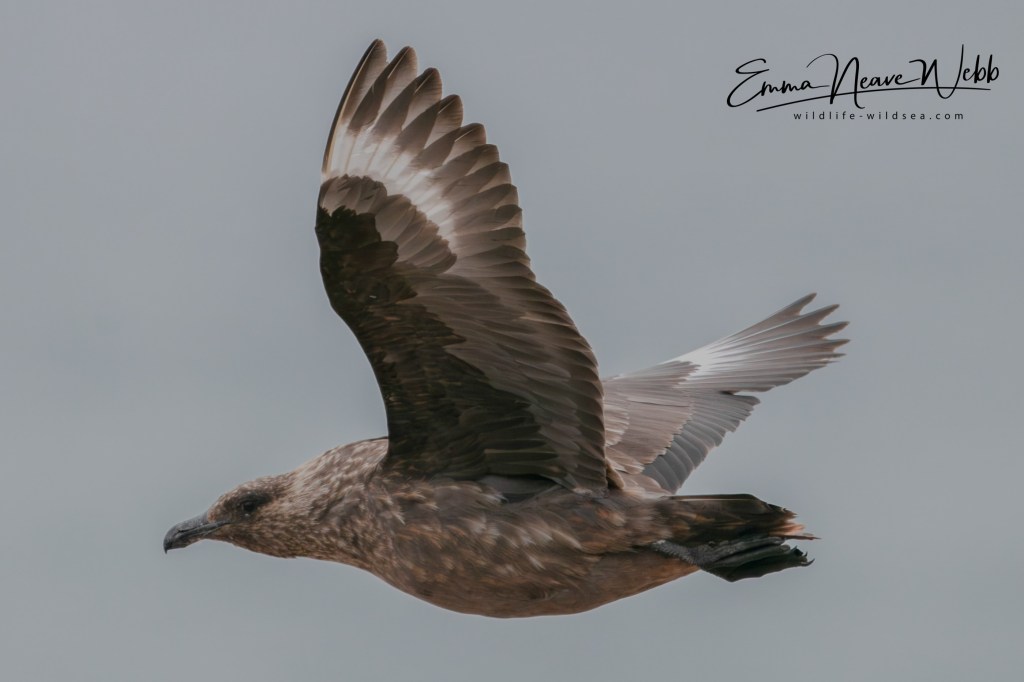
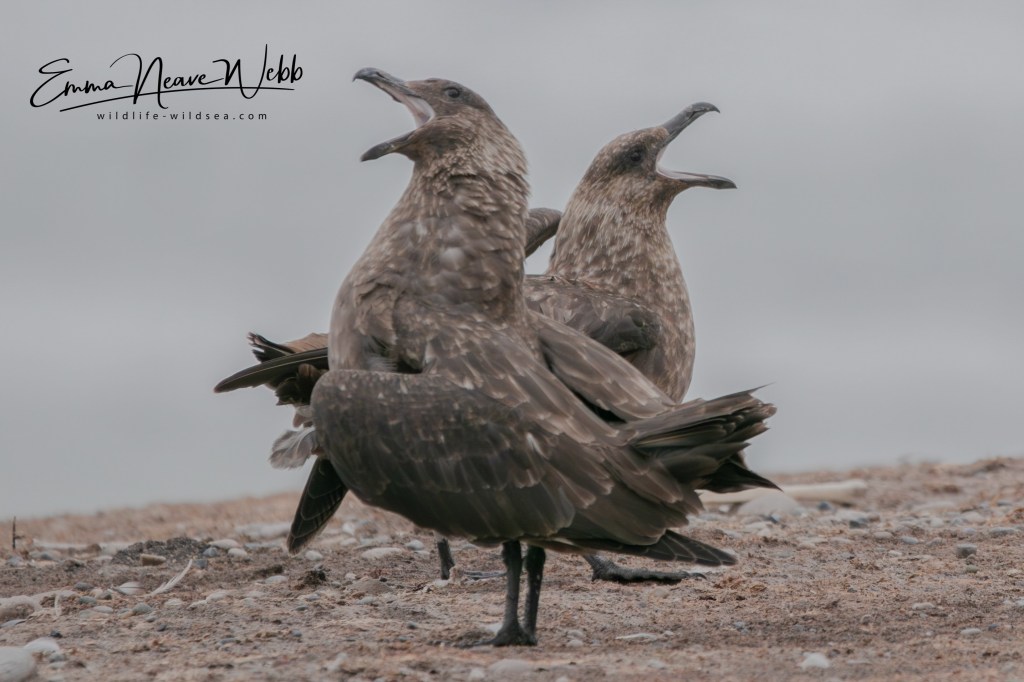
And then the weather arrived. Anyone who has spent time in the Falkland Islands will be familiar with this. Anyone who, like me, comes from Orkney will feel immediately and uncomfortably at home. Hail, driving rain, and a sky that had clearly decided to make a point. The hike up the hill towards the black-browed albatross colonies and western rockhopper penguin breeding grounds became, briefly, rather less pleasant and much steeper and slipperier than it had looked from the zodiac. It was also the moment at which it became apparent, beyond any reasonable doubt, that the expedition jackets provided by the project were not waterproof. We had raised this concern before departure. The then project lead hadn’t listened. We were not entirely surprised. We were, however, very wet.
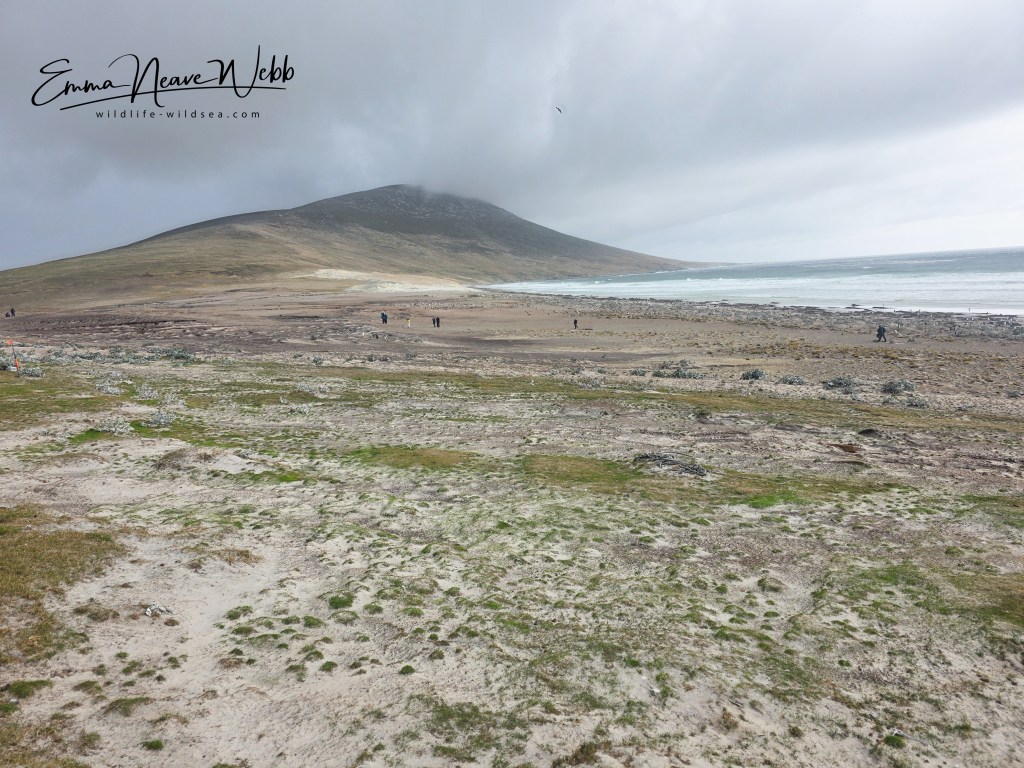
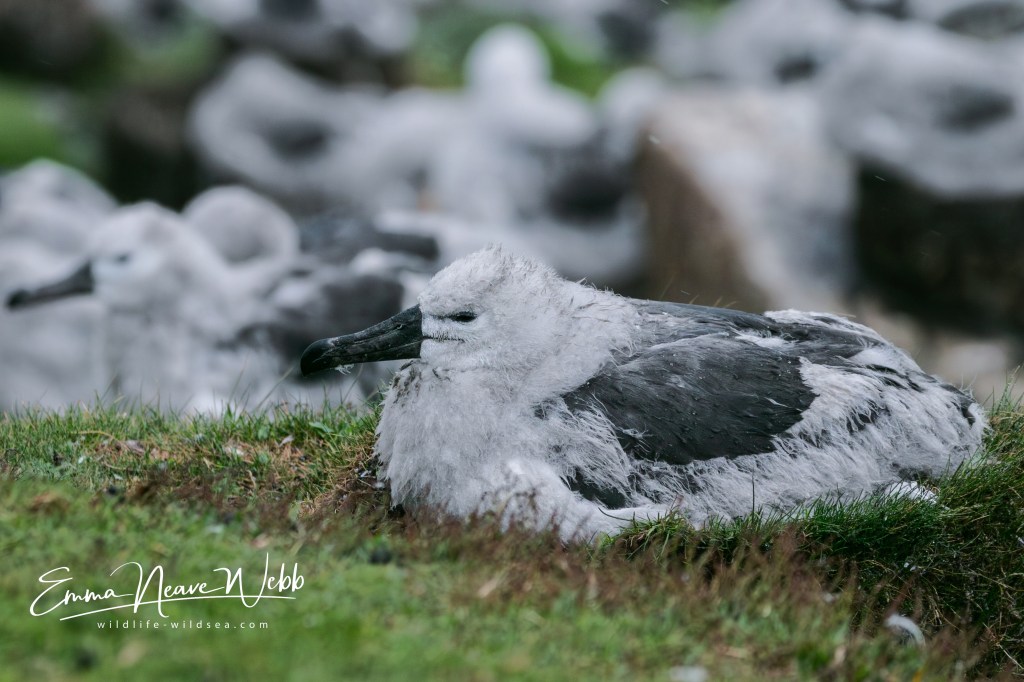
Saunders Island was the only place on the entire expedition where we encountered a breeding black-browed albatross (Thalassarche melanophris) colony, although they had been our constant companions at sea since leaving Ushuaia.
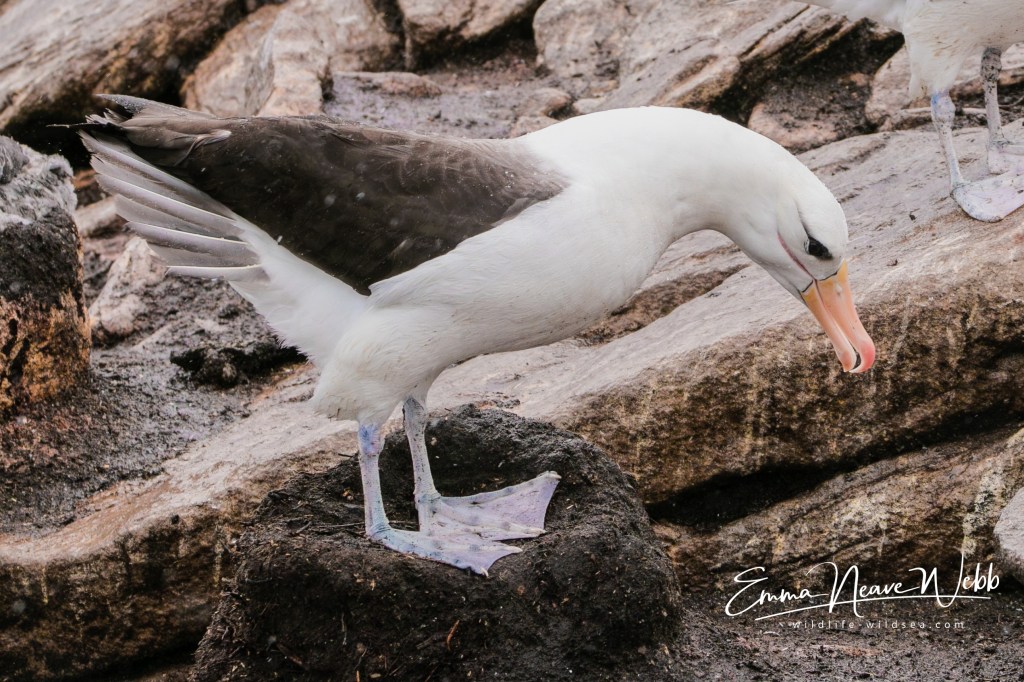
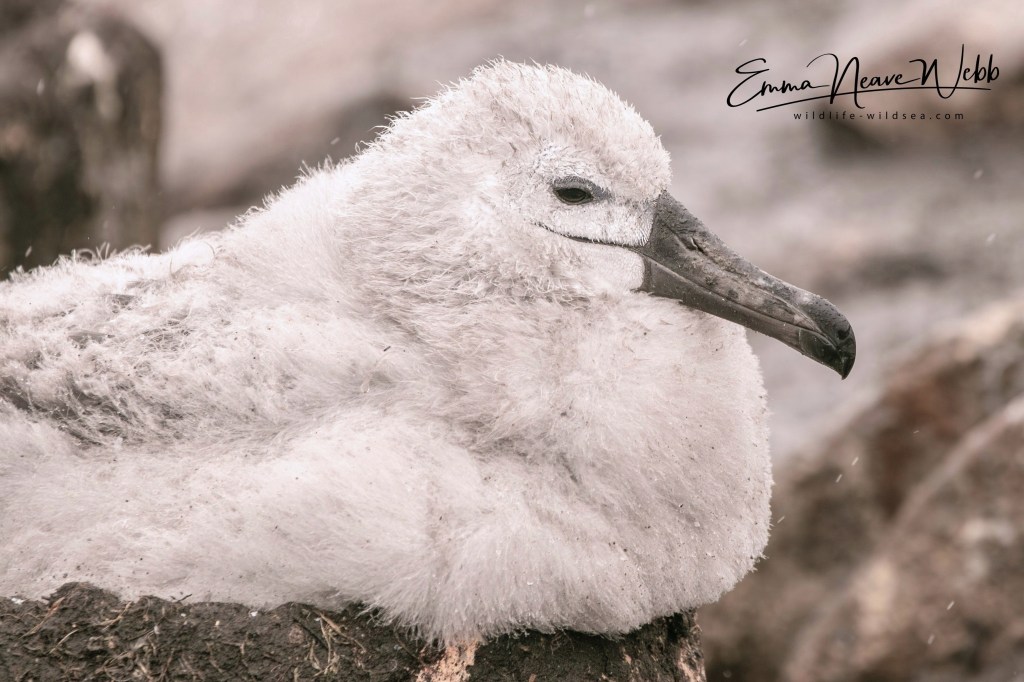
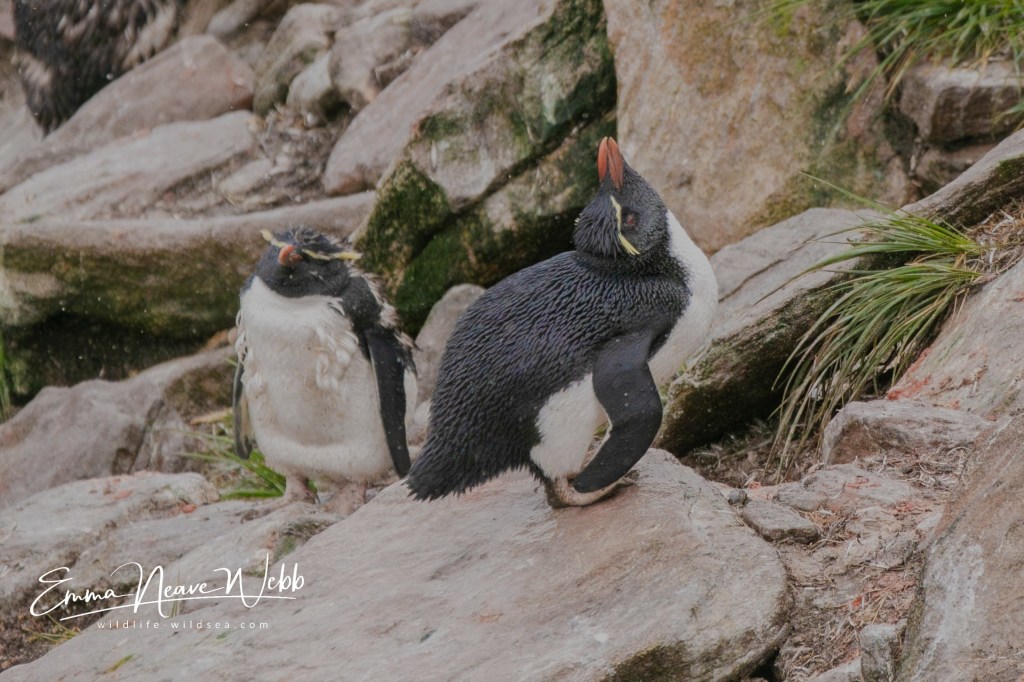
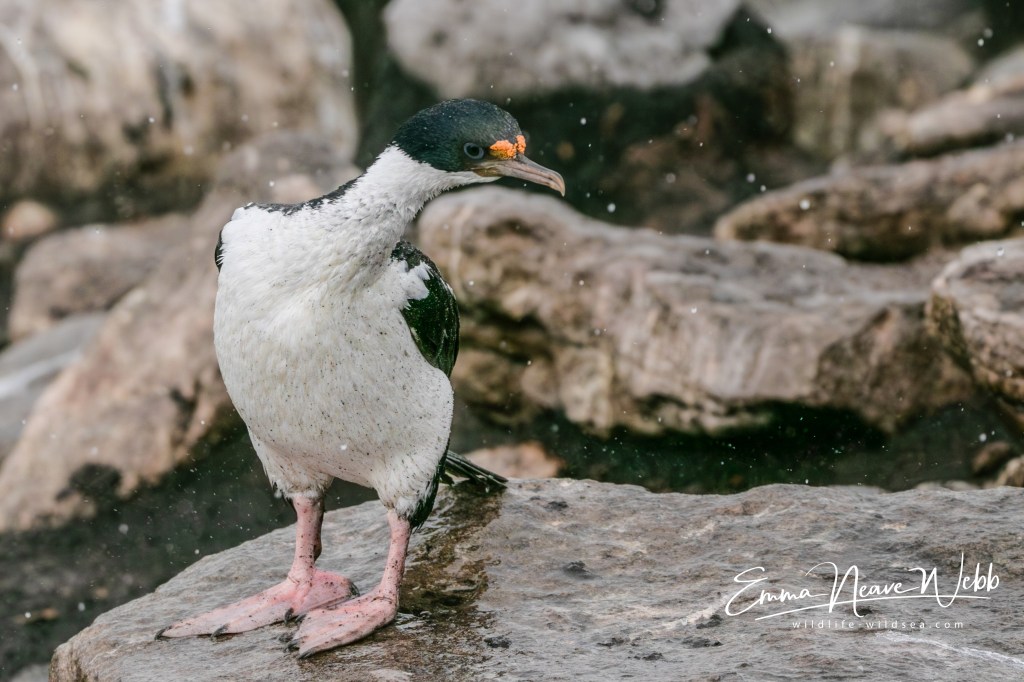
It was also the only place we saw western rockhopper penguins (Eudyptes chrysocome) throughout the expedition, which made the somewhat miserable trudge uphill entirely worthwhile. Listed as Vulnerable, with the Falkland Islands population alone having declined by an estimated 1.4 million pairs – around 87% – since 1932, they breed on islands along the southern Chilean coast from Magallanes Province to Cape Horn and across the Falkland Islands, dispersing widely northward along the Patagonian coast outside the breeding season. They are extraordinary birds: small, fierce and utterly magnificent, with vivid sulphur-yellow crests, brilliant red eyes. On the Falkland Islands their colonies are often found alongside those of black-browed albatrosses, and Saunders Island was no exception, with imperial shags (Leucocarbo atriceps) adding a third species to what was already a remarkable mixed colony, all sharing the steep rocky slopes being lashed by horizontal hail and driving rain. The albatross, rockhoppers and shags appeared not to notice or, more likely, not to care. There is something both humbling and faintly irritating about wildlife that is visibly more comfortable in appalling weather than you are, even when you are used to it!
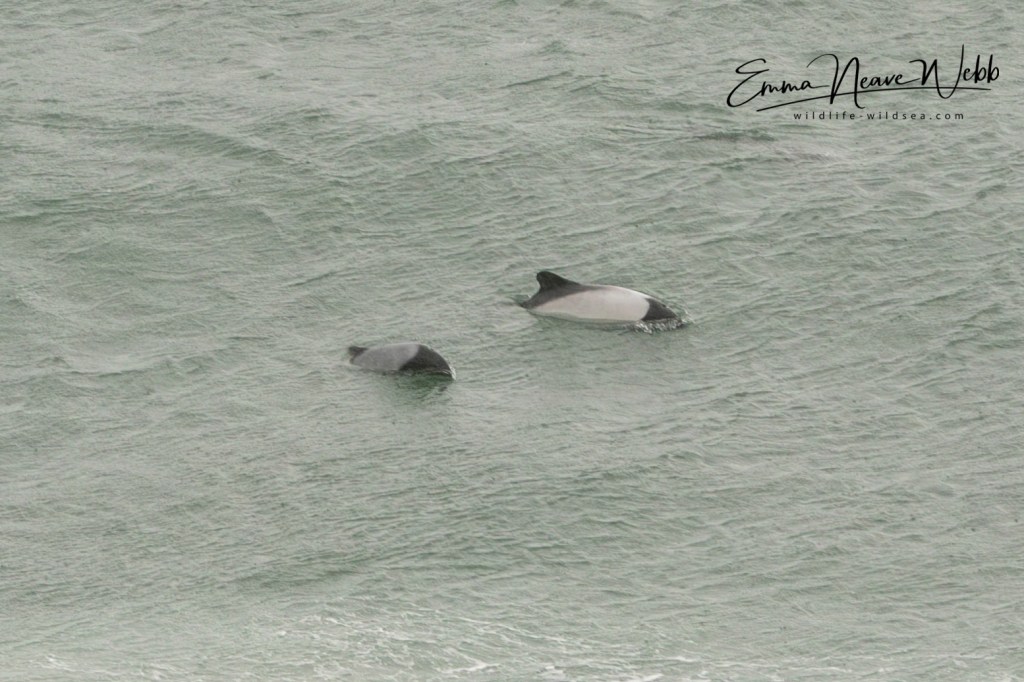
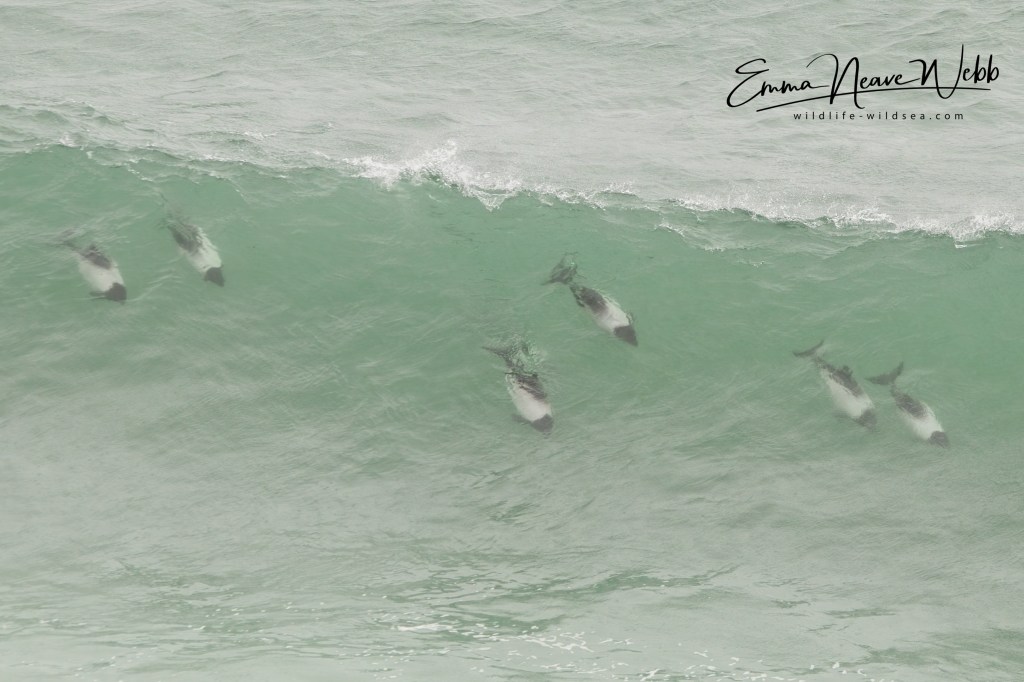
And then, as abruptly as it had arrived, it stopped. The sky cleared, the sun came out, and the Falkland Islands remembered that they are extraordinarily beautiful. On the way back down, a shout went up: Commerson’s dolphins (Cephalorhynchus commersonii) surfing in the swell along the coastline. Several small groups of them, working their way up and down in the now brilliant sunshine, their striking black and white patterning flashing clean and vivid through the wave faces. These are Falkland Islands specialists, rarely found far from the coast, and seeing them in such good conditions after the battering of the past hour felt like the island offering a small apology for its earlier behaviour.
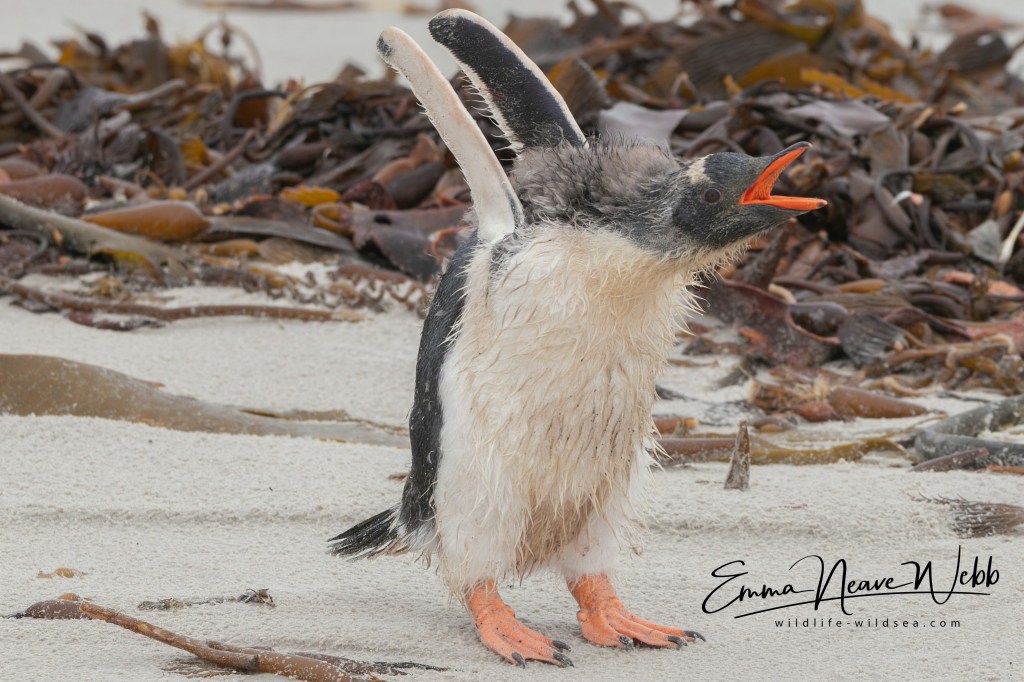
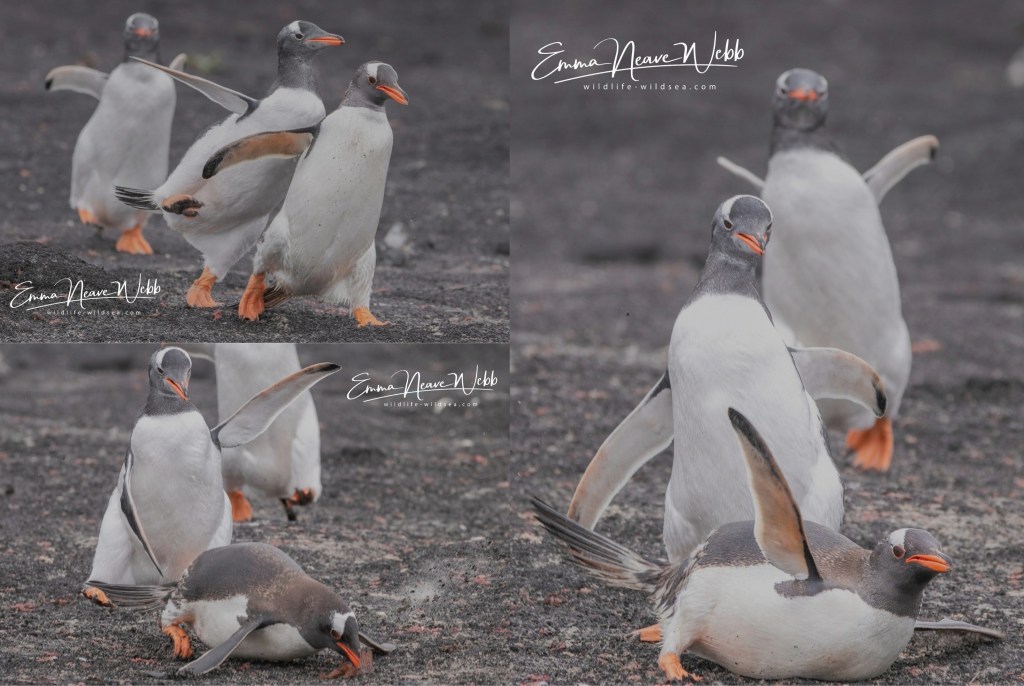
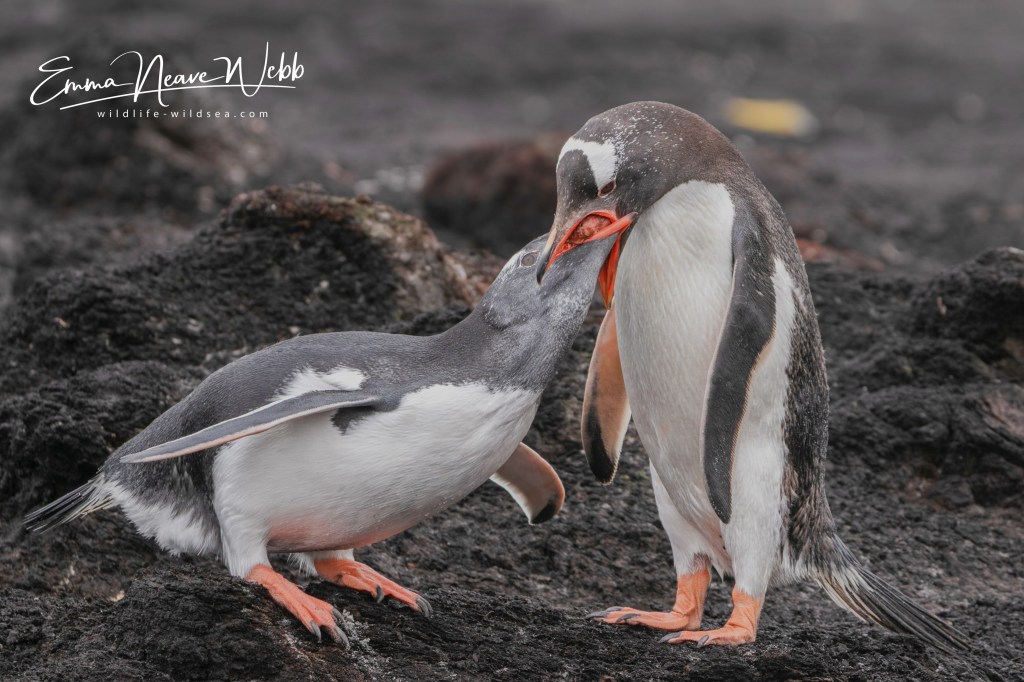
Back at the beach, the king penguins were still there, statuesque as ever. The gentoos, by contrast, were as chaotic as we had left them. The young birds were still engaged in the time-honoured tradition of chasing their parents relentlessly around the beach in pursuit of a meal, a performance of stamina and sheer persistence with an added dose of clumsiness that is completely impossible to watch without giggling. Gentoo penguins cannot help but make you laugh. There is something about the combination of extreme purposefulness and complete physical comedy that bypasses all professional composure entirely, and I defy anyone to stand on a Falkland Islands beach near a gentoo penguin colony and remain straight-faced.
Before we were ready, it was time to head back to MV Hondius in preparation for a short sailing to Carcass Island and the hope of seeing the endemic Cobb’s wren. If this was a taster of what the expedition had in store, it was going to be something rather special. I was also, I noted, already several hundred photographs deeper than any sensible person would consider reasonable. This pattern was not going to improve.
More to come….
Wildlife Wild Sea
📍 Saunders Island, Falkland Islands, 18th February 2026
 Wildlife, Wild Sea
Leave a comment