
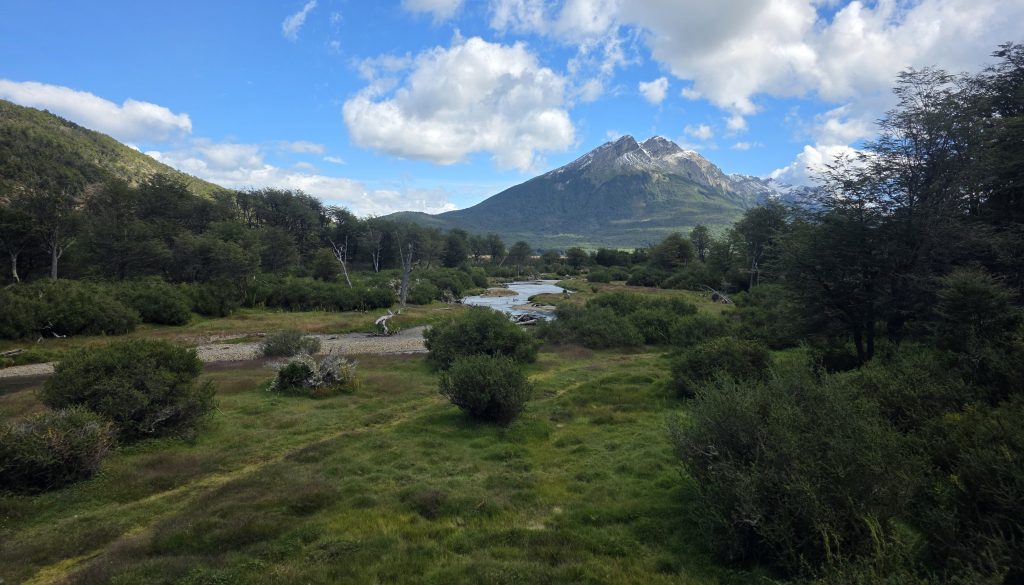
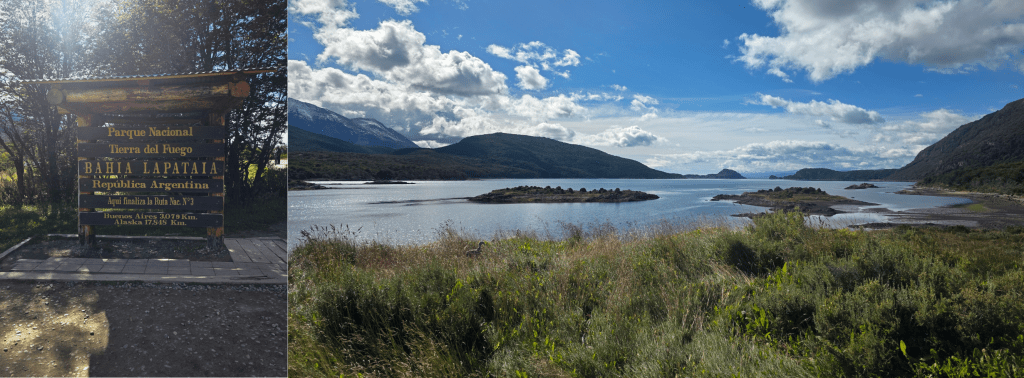
If Ushuaia is the end of the world, Parque Nacional Tierra del Fuego is what lies beyond the edge of it. Established in 1960 and covering around 63,000 hectares of southern beech forest, glacial lakes, rivers and Beagle Channel coastline, it is one of Argentina’s most spectacular national parks, and one of the few in the country with direct access to the sea. It also has the considerable distinction of being where the Ruta Nacional 3 finally gives up. The road stretches north to Buenos Aires, and beyond that, as part of the Pan-American Highway, all the way to Alaska, nearly 18,000 kilometres away. Here at Bahía Lapataia, it simply stops. There is nowhere further to go.
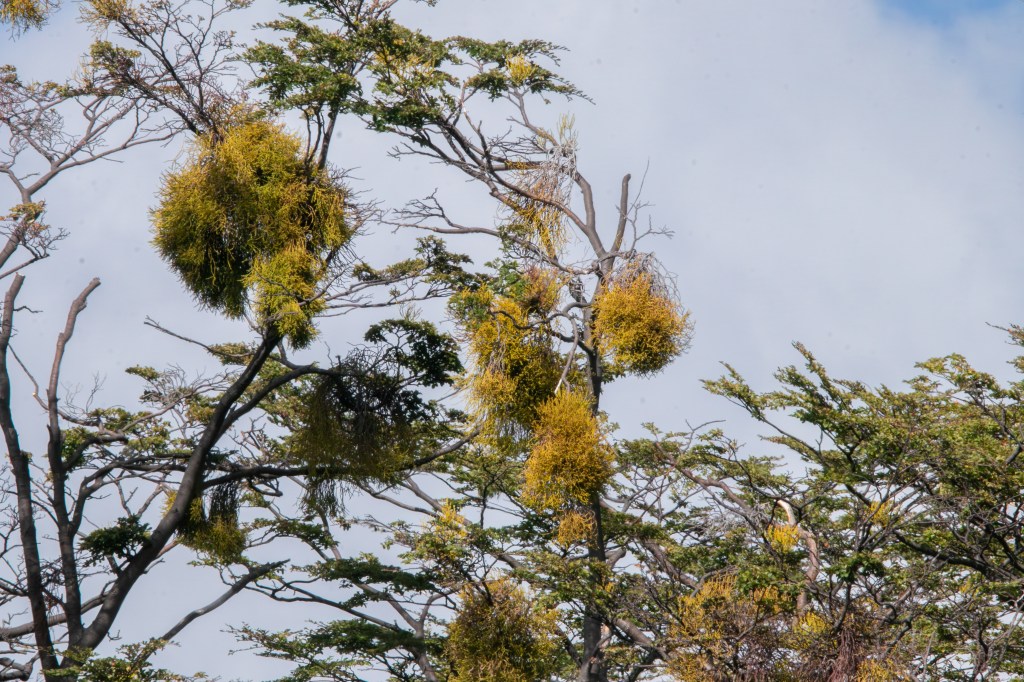
We spent the morning hiking through the forest and I was glad of every minute of it. The lenga beech (Nothofagus pumilio) woodland is extraordinary: twisted, ancient-looking trees draped with misodendrum, the so-called “flying flowers” of Patagonia. These curious parasitic plants attach themselves to the branches of the beech trees, drawing water and nutrients from the host while producing small yellow flowers in season. They are everywhere, giving the forest a slightly otherworldly quality, as though the trees themselves are trailing something.
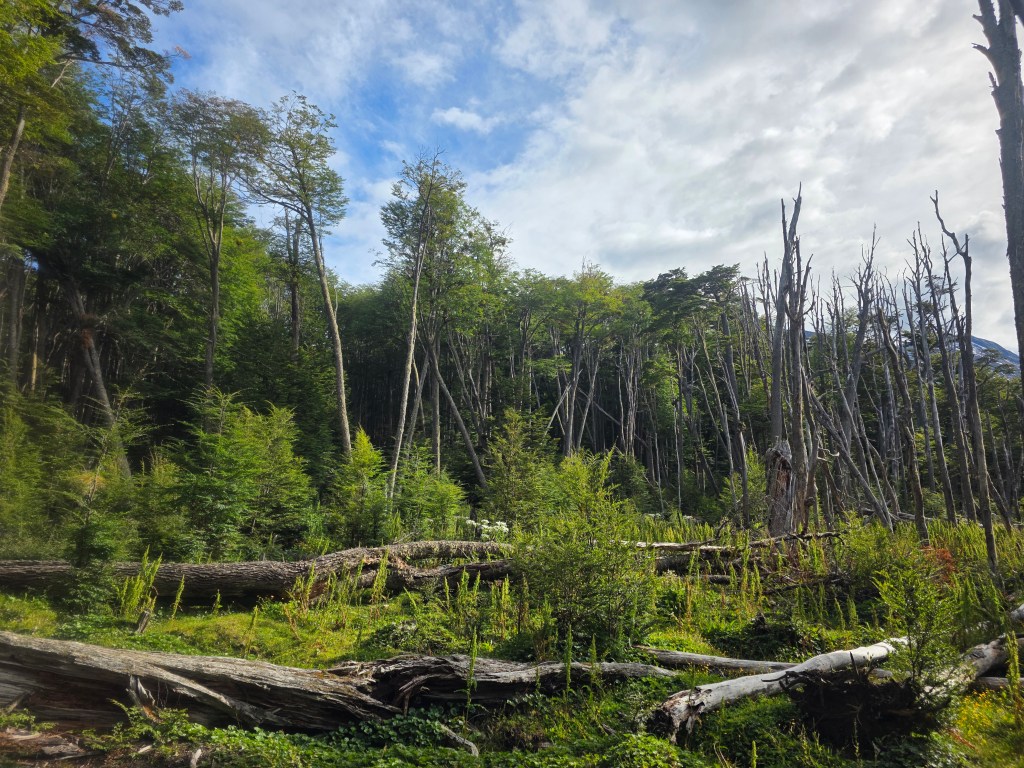
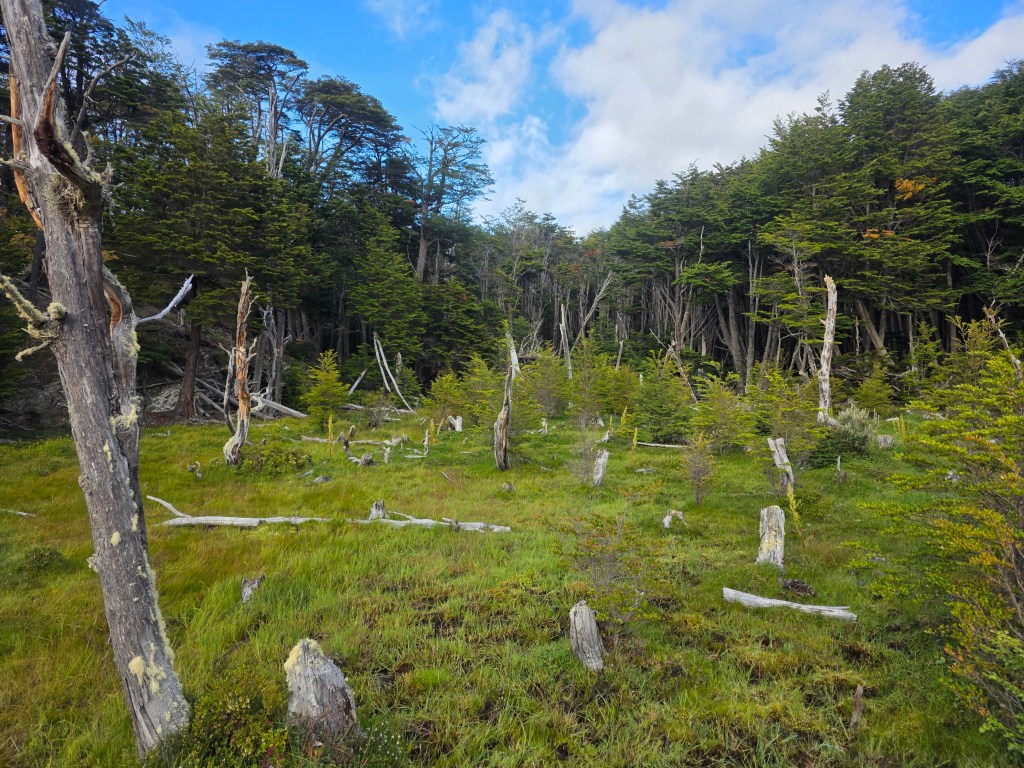
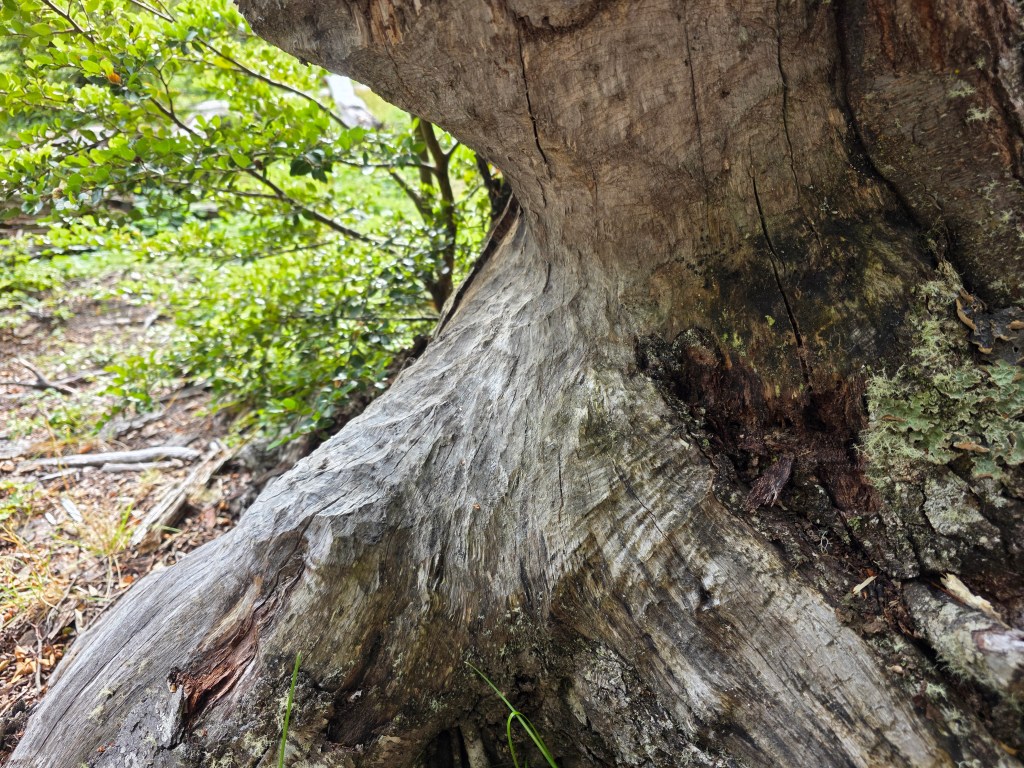
The forest also tells a less welcome story. The gnawed and felled trunks scattered throughout are the work of North American beavers (Castor canadensis), introduced to Tierra del Fuego in 1946 in a misguided attempt to establish a fur trade that never materialised. With no natural predators, the population exploded. There are now an estimated 100,000 beavers across the archipelago, and the damage to the native lenga beech forest is significant and ongoing. Unlike North American forests, which evolved alongside beavers and can recover from their activity, the trees here have no such resilience. Flooded areas often die and do not regenerate. Eradication programmes are underway, but the scale of the problem is considerable.
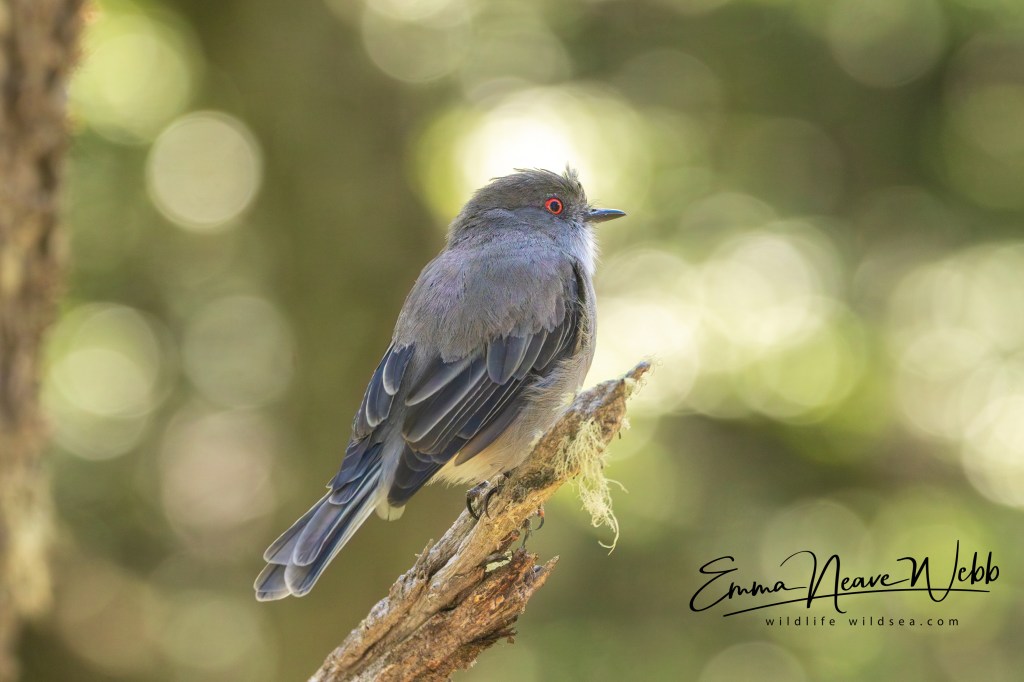
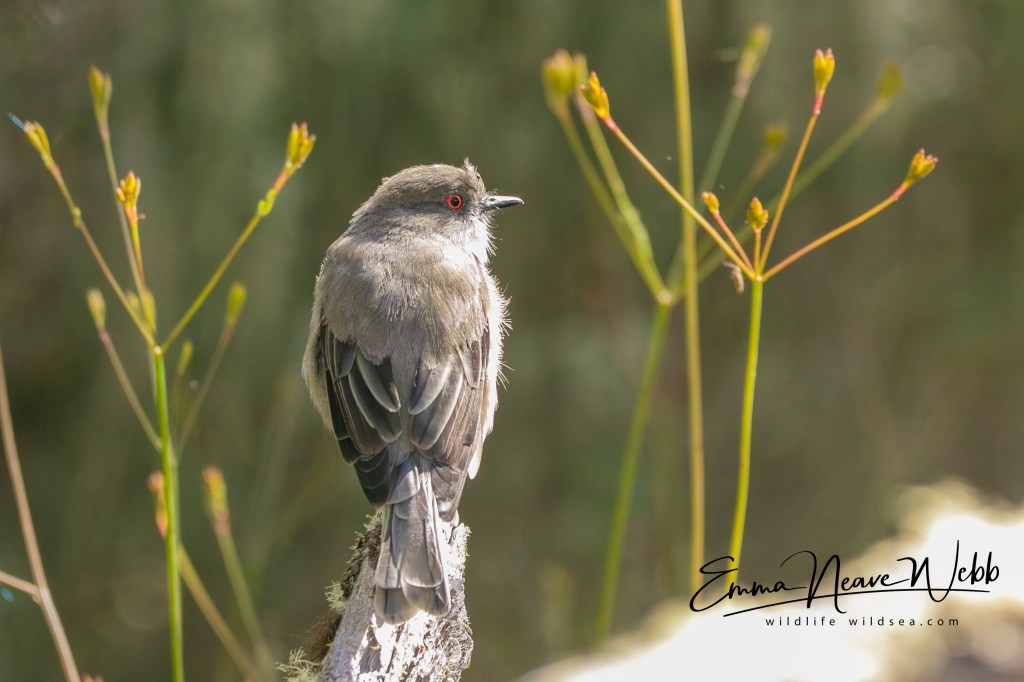
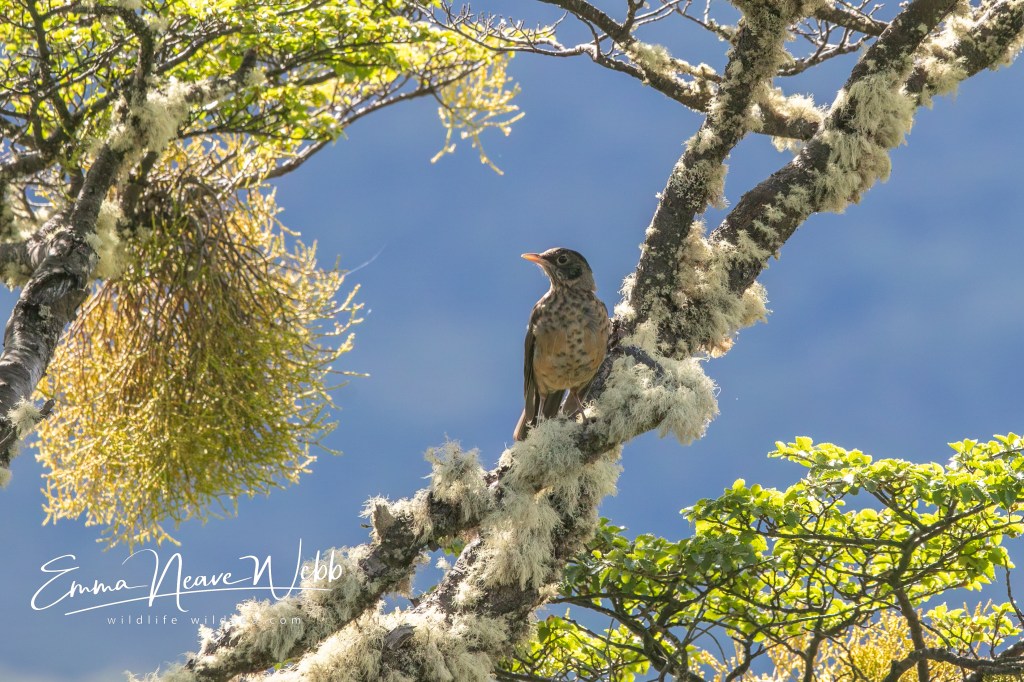
The forest also delivered one of the best bird encounters of the excursion. A fire-eyed diucon (Pyrope pyrope) appeared on a branch only feet from our group and simply stayed there, regarding us with complete indifference to our existence. For a bird named after a vivid red iris, the close-up view was exceptional. It posed with great patience before dropping back into cover as unhurriedly as it had arrived. A brief, tantalising glimpse of an austral thrush (Turdus falcklandii) moving through the trees completed the forest list, though it was considerably less obliging about being admired.
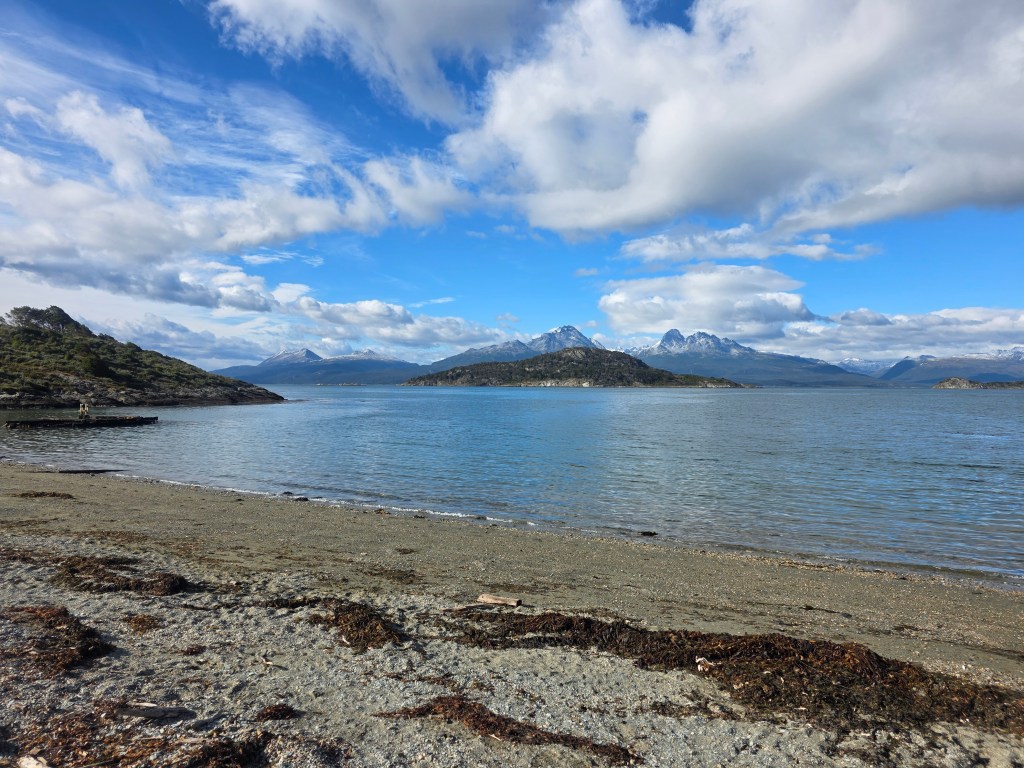
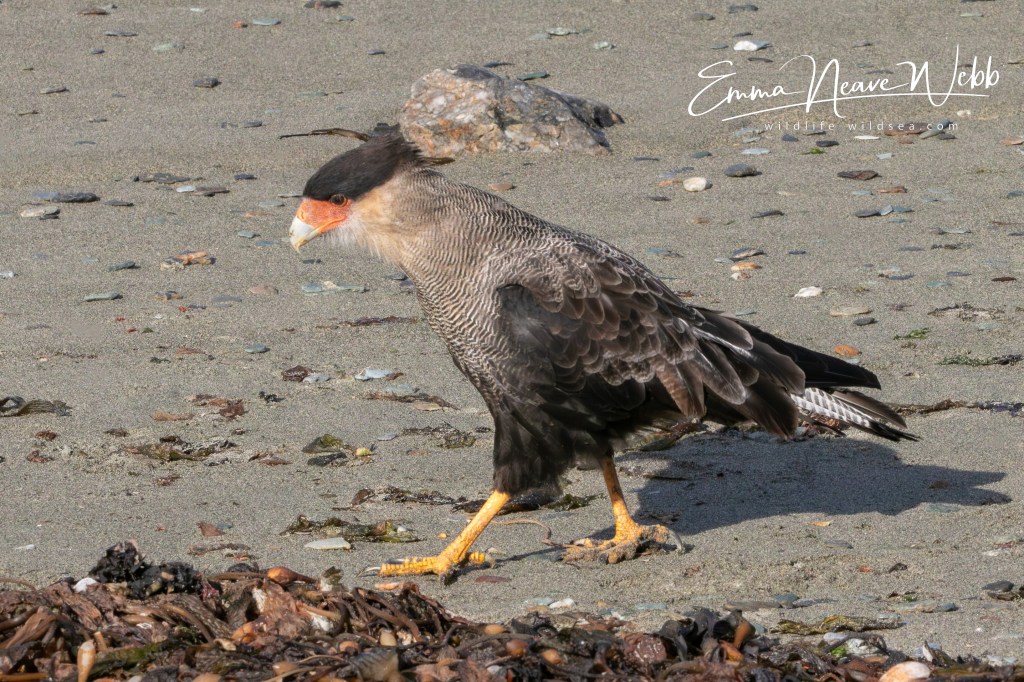
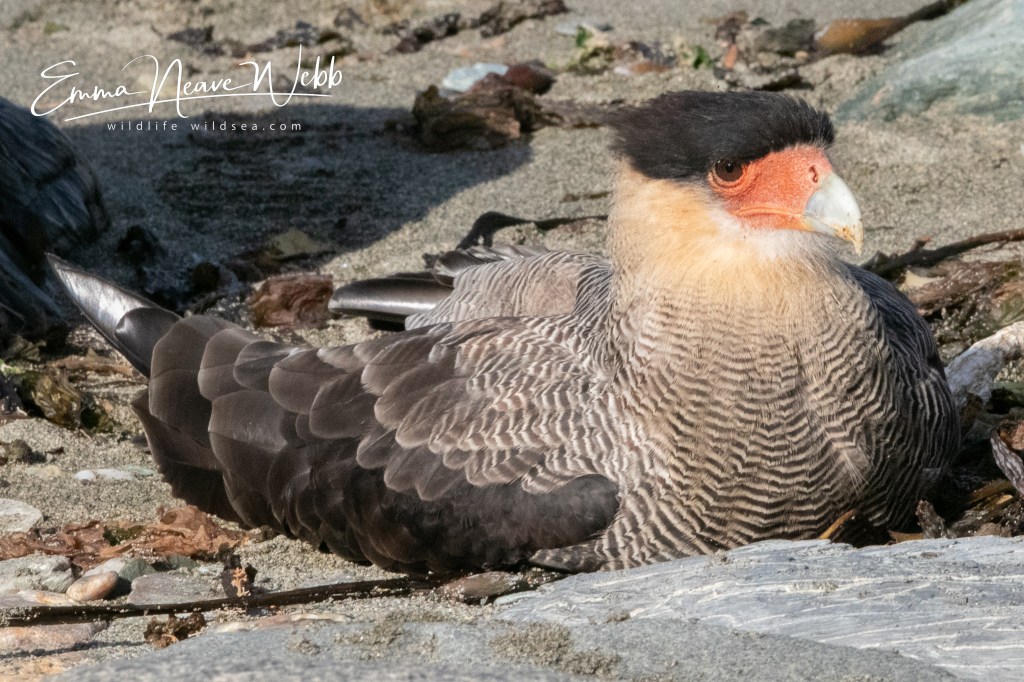
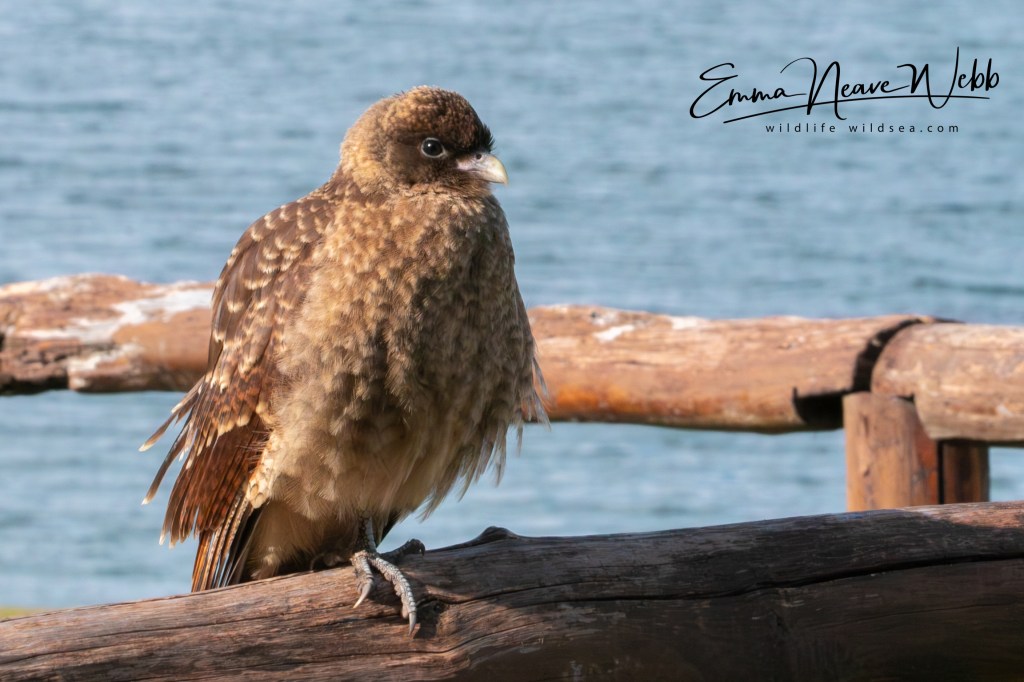
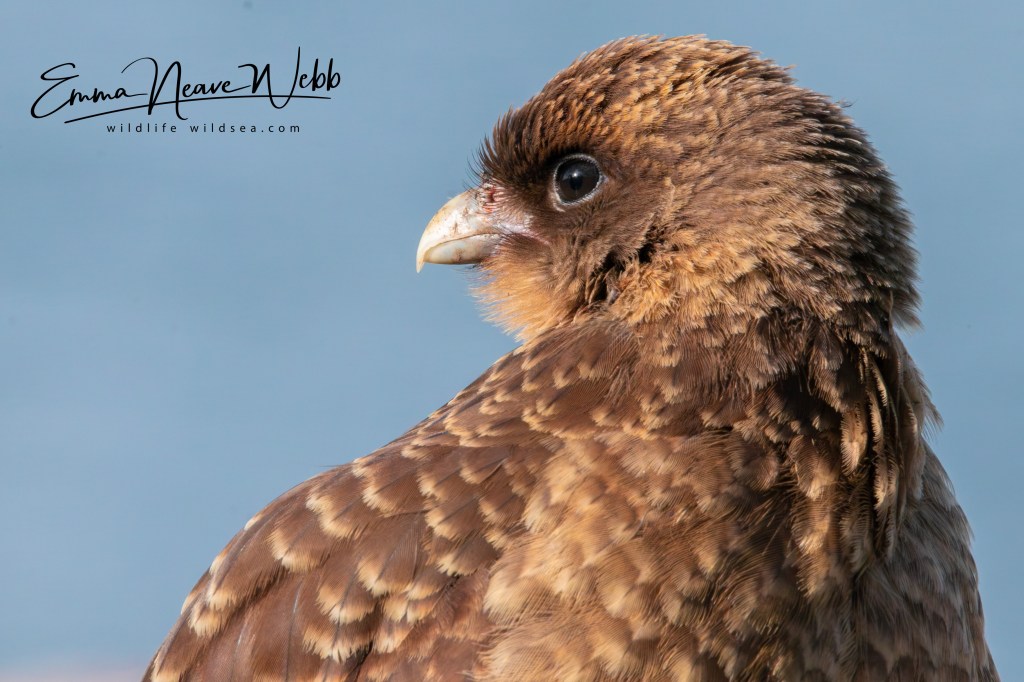
Down at the Beagle Channel, the beach was hosting its own drama. A crested caracara (Caracara plancus) was working the shoreline, scavenging with focused efficiency and entirely unbothered by our presence whilst a second sat watching. A chimango caracara (Daptrius chimango) was also in attendance, its interest less in the beach and more in the distinct possibility that some of the humans nearby might be about to have a picnic. It was to be disappointed, but the resulting encounter was absurdly close regardless.
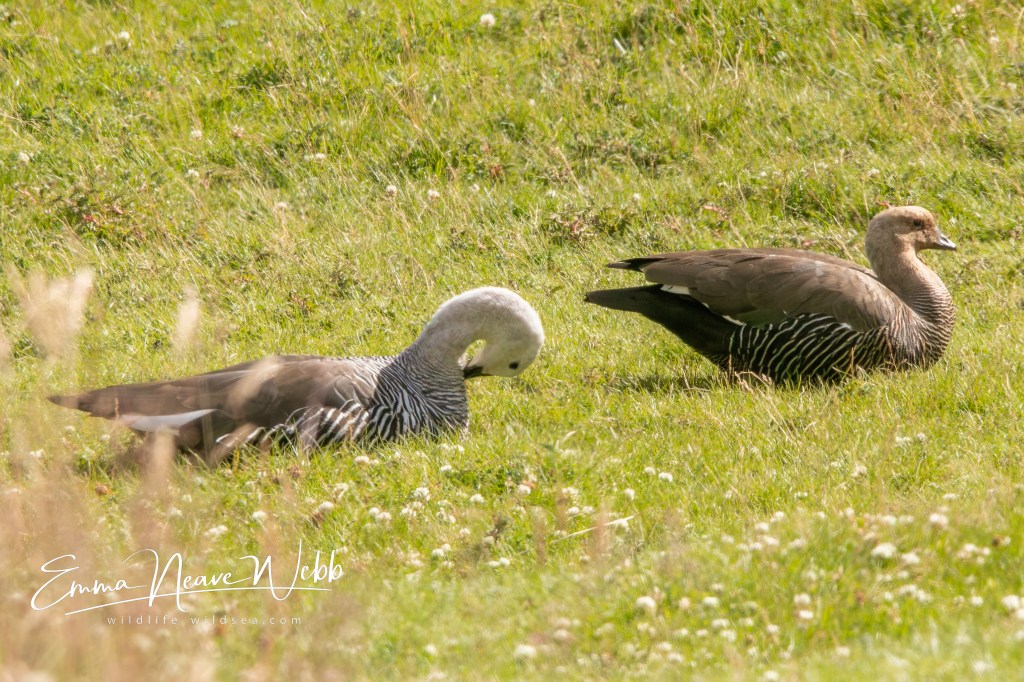
Photographing the park’s famous sign at Bahía Lapataia is, of course, entirely obligatory, and I have no shame about this whatsoever. What it marks is not merely the end of the road through the park, but the symbolic conclusion of the Pan-American Highway itself: a journey stretching nearly 18,000 kilometres from Alaska to this quiet spot on the shores of a glacial fjord, at roughly nine metres above sea level, beside peat bogs and subantarctic forest, with upland geese grazing the shoreline and absolutely no fanfare. It is, in the best possible way, a completely absurd and wonderful place to stand. It has also, I should warn anyone who knows me, put an idea in my head about doing the full journey from the other end.
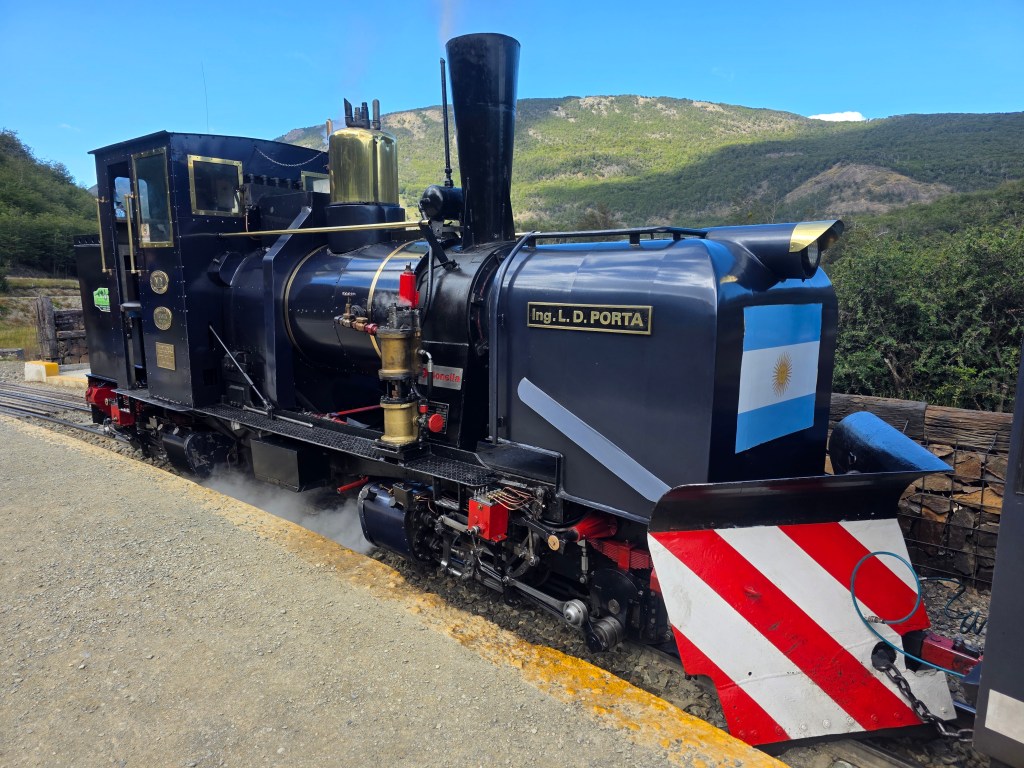
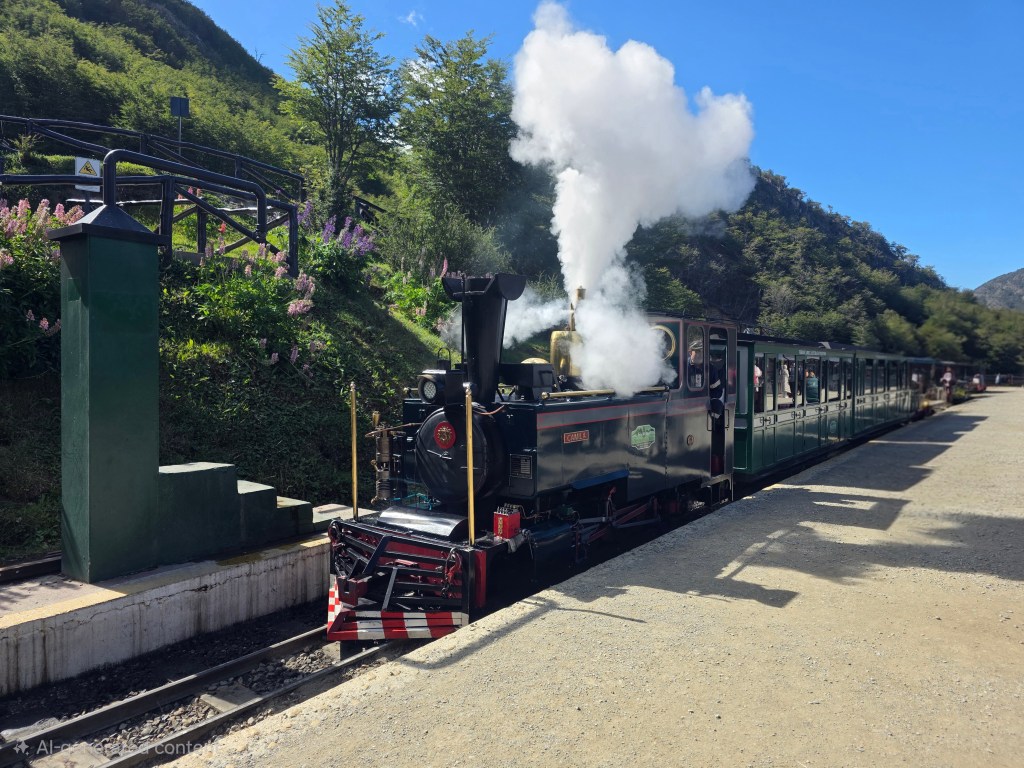
The day ended with a ride on the Tren del Fin del Mundo, the southernmost railway in the world, which follows a narrow-gauge track through the park on a route originally used to transport prisoners from Ushuaia’s penal colony to the logging areas in the early twentieth century. It is now considerably more comfortable than it was for the original passengers, which feels like the least that could be said. It is also, it must be said, absolutely and unashamedly touristy, complete with the opportunity to pose for photos with actors dressed as prisoners. Reader, I posed and bought the photo.
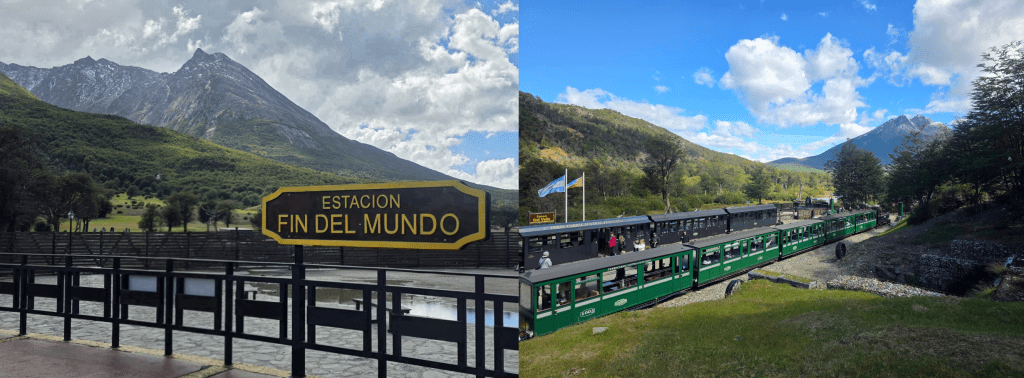

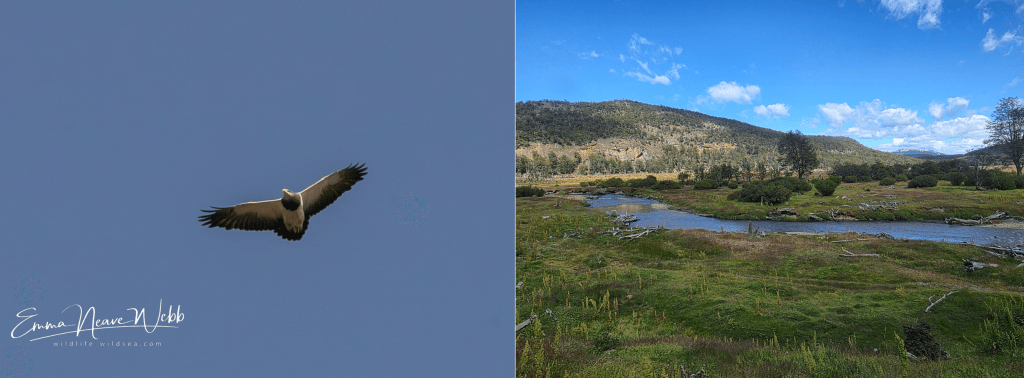
The train journey added one final flourish: a black-chested buzzard eagle (Geranoaetus melanoleucus) drifting over the station at the midway halt, effortlessly covering more ground in thirty seconds than we had managed all morning. The scenery through the carriage windows was, predictably, ridiculous.
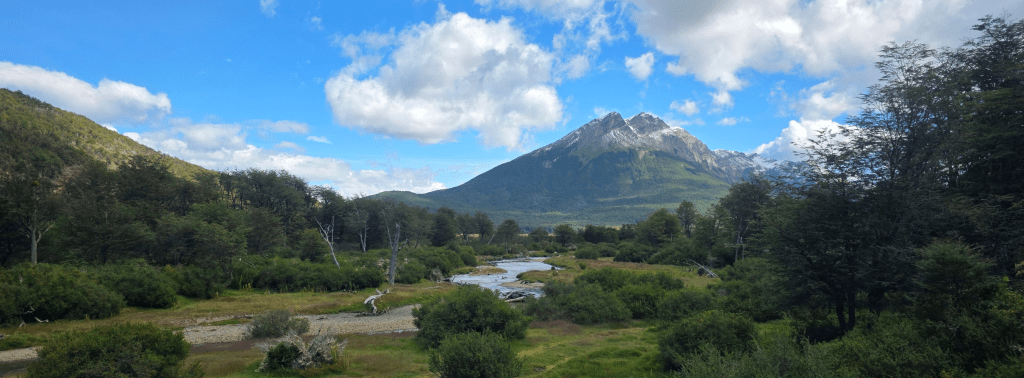
A few hours in Parque Nacional Tierra del Fuego is, I can confirm, nowhere near enough. The park has a network of campsites and trails that push further into the wilderness than a day visit can reach, and I am already thinking of ways to return and make proper use of them – perhaps at the end of a long journey from Alaska. There is a wilder, quieter version of Tierra del Fuego waiting beyond the day-tripper routes, and I intend to find it. It will keep.
More from the expedition to come. We haven’t even cast off from the dock yet.
Wildlife Wild Sea
📍 Parque Nacional Tierra del Fuego, Argentina

 Wildlife, Wild Sea
Leave a comment