
You didn’t get into cetacean research for the glory or the money, which is fortunate, because there is none. You got into it because somewhere along the way these extraordinary animals captured your heart, and because the waters around the UK desperately needed someone to document what’s happening to them at a fine-scale level. And now here you are, running a research charity almost entirely on your own, for free, wearing every hat imaginable: scientist, grant writer, social media manager, treasurer, data analyst, fundraiser, administrator, and general dogsbody.
But lately, something feels off. The passion that once fuelled those long days watching the water now feels like an obligation. You lie awake wondering if you’re qualified enough, experienced enough, or making enough of a difference, especially when you’re doing it all alone. Sound familiar? You’re not alone, even though it certainly feels that way.
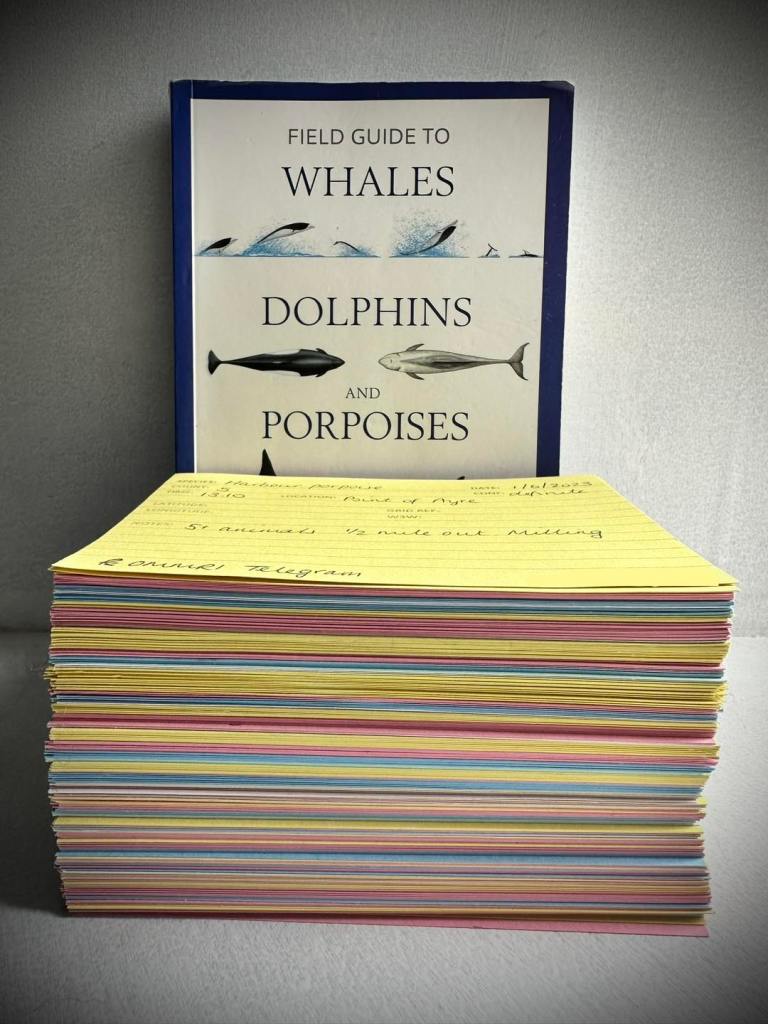
Imposter syndrome thrives in the world of cetacean research. From seasoned academics to early-career researchers to cetacean enthusiasts running a local group, we all experience it at some level. However, unlike researchers at established institutions with formal hierarchies and clear career paths, those of us running small organisations often lack traditional markers of legitimacy. You might not have a PhD from St Andrews. Your “office” is probably your kitchen table. Your salary doesn’t exist because as a founding trustee you legally cannot take one, even if the charity somehow had money, which it doesn’t.
And yet, you’re doing real science. You’re collecting vital data that no one else is gathering for your area. You’re filling gaps that larger organisations can’t or won’t fill. The cognitive dissonance can be overwhelming. The imposter sits beside you, whispering insidiously whilst you’re trying to process data or simply get through the day.
“Real scientists work at universities with proper funding and support teams. You’re just playing at this.”
“If people knew how much you’re struggling to keep this together single-handedly, they’d never take the data seriously.”
“You don’t have enough publications, credentials, or experience to deserve this role. Who do you think you are?”
The truth? You’re doing what needs to be done when no one else is doing it. That researcher with the slick social media presence probably has a team behind them. The established organisation you admire likely has salaried staff and doesn’t rely on one person’s goodwill. And that scientist who seems to have it all figured out? They’re probably not doing it entirely alone whilst also trying to hold down paid work elsewhere just to survive.
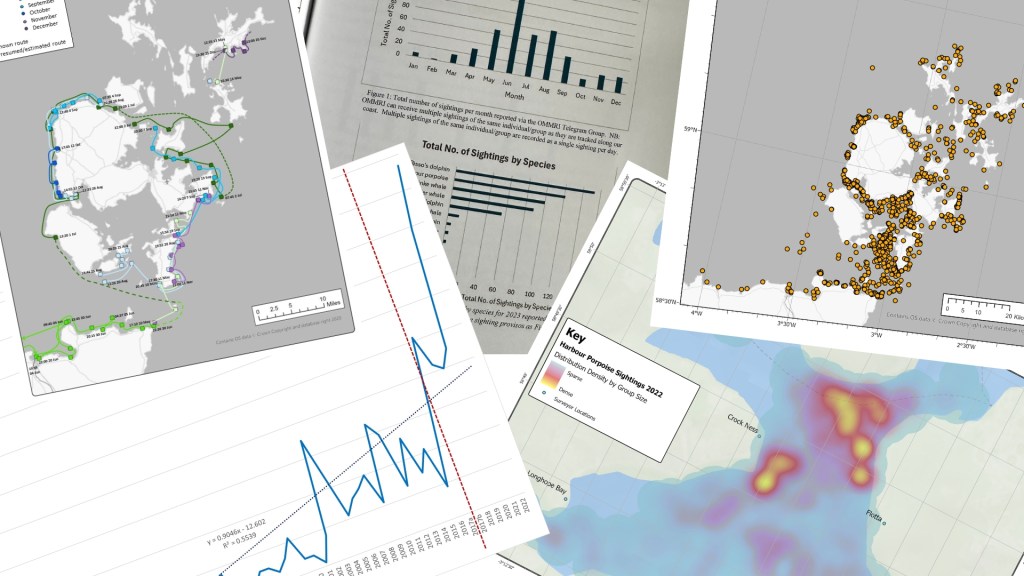
However, it isn’t just imposter syndrome we have to contend with. Burnout in cetacean research doesn’t usually arrive with a bang. It’s more like the tide creeping up the Firth, gradual, relentless, and before you know it, you’re cut off with no way back to shore. For those running small organisations, burnout has some especially brutal characteristics.
People genuinely mean well when they offer to help, but then life happens. Circumstances change. Interest wanes. One by one, people drift away. Then there are the others, the ones with egos who breeze in thinking they know better, despite having little knowledge of the field. They want to reorganise everything, question your methods, and create problems rather than solving them before disappearing and leaving you to sort out the mess. Managing these individuals becomes yet another exhausting task. Eventually, you’ve learnt not to plan anything around potential volunteers. Now you simply do everything yourself because it’s easier than hoping for help that may not come, or worse, dealing with “help” that makes everything harder.
When your organisation’s survival depends entirely on you, there’s no boundary between “on” and “off.” You’re checking emails whilst trying to eat dinner. You’re verifying data on Sunday evenings. You can’t take a walk along the coast without automatically scanning for dorsal fins or feeling guilty that you aren’t doing a survey. The work follows you everywhere because you are the work, and the work never stops.
There is no funding. None. Every pot you apply to seems designed for larger organisations with track records you can’t possibly match. Trusts want “partnership working” when there’s no one to partner with. Foundations require “match funding” you don’t have. Meanwhile, the data you’re collecting is absolutely vital, changes in distribution, behaviour, residency patterns that no one else is documenting. But vital doesn’t pay the bills or justify your existence to funders who don’t understand why local-scale, long-term research matters.
Larger institutions have colleagues and support staff. You might occasionally have volunteers, who you then have to train and supervise, adding to your burden. But ultimately, the weight of every decision falls entirely on your shoulders. Who do you turn to when you’re overwhelmed or having a spectacularly shite day? It’s just you, alone, carrying everything. You feel guilty when you work too much and neglect relationships or health. You feel guilty when you take time off because the work isn’t getting done. You feel guilty about feeling guilty because “at least you’re studying cetaceans”, as if that should somehow make chronic stress acceptable. The guilt feeds on itself, creating a spiral that’s nearly impossible to escape.
Burnout and imposter syndrome often travel together, creating a toxic feedback loop. You might recognise the signs: you’ve stopped enjoying the work that once excited you, you’re cynical about whether any of this makes a difference, you experience physical symptoms like headaches, insomnia, or constant exhaustion. You’re paralysed by decisions that used to feel manageable, you avoid tasks you once found energising, you’ve started thinking “why do I bother?” more often than you’d like to admit, and you’ve even considered throwing in the towel.
So how do you break the cycle? First, accept reality. You cannot run a research charity single-handedly forever. That’s not failure, it’s physics. One person has limited time, energy, and capacity. Once you accept this, you can ruthlessly prioritise. Identify what’s absolutely essential, core data collection that no one else is doing. Everything else needs honest assessment. Does it directly serve the mission, or is it performative exhaustion?
Stop compensating for others. If someone says they’ll do something and doesn’t, let it not get done. The world will not end. Your charity will not collapse. Yes, this means some things won’t happen. That’s their responsibility, not yours. At the same time, build your network. Find peers who understand what it’s like to run something alone and unfunded. Connect with other small marine research groups. Be honest about your struggles. You’ll find your people.
Define success realistically. You’re not competing with WDC or SMRU. Collected consistent monthly data despite having no help? That counts. Kept the charity legally compliant whilst also working a paying job? That’s managing two jobs simultaneously. Create boundaries, even when they feel impossible. Designate one full day per week where you do absolutely nothing charity-related. Not one email, not any data verification. Nothing. Protect it fiercely.
Perhaps most importantly, separate your worth from your work. You are not your charity. You are a complete human being whose worth exists entirely independently of cetacean research. Remember why you love watching cetaceans in the first place – you are allowed to enjoy whale watching without having to document the encounter.
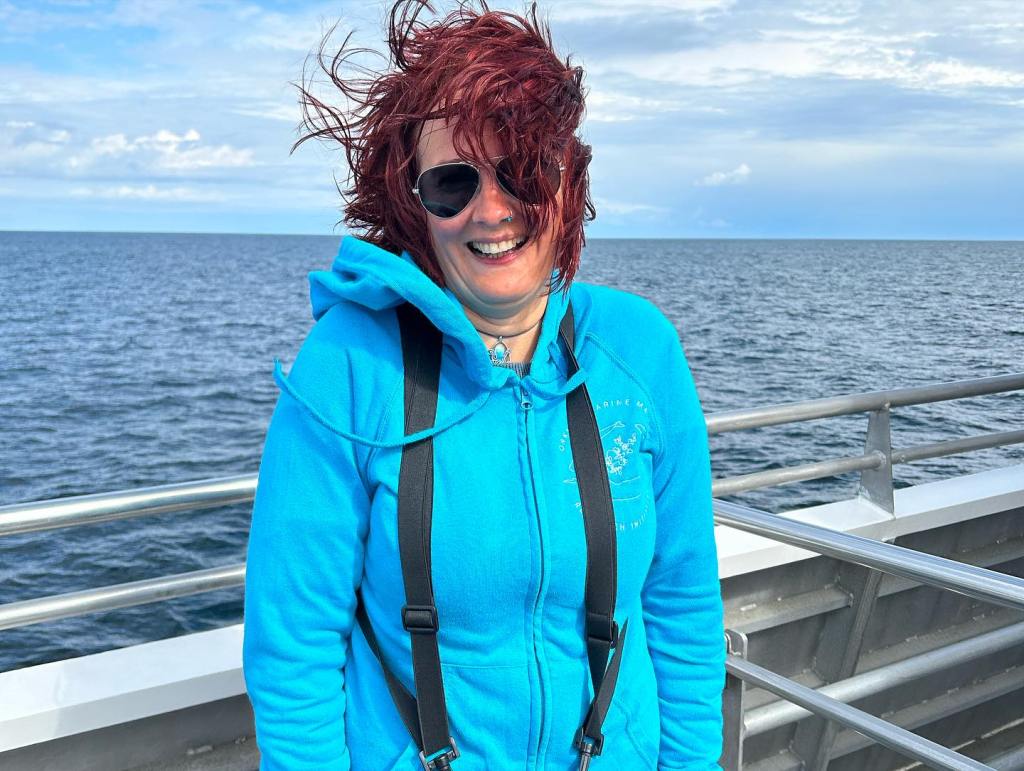
On your worst days, when you’re drowning in administrative tasks and wondering whether you’re making any difference at all, remember this: the data wouldn’t exist without you. Those minke whales, harbour porpoises, white-beaked dolphins, or killer whales passing through your study area wouldn’t have anyone documenting their presence. The baseline you’re establishing is adding to our collective understanding.
You don’t have to be Michael Bigg or Dame Jane Goodall. You don’t have to match the output of funded institutions. You just have to be you, doing what you can with the resources available. You’re not an imposter. You’re doing legitimate conservation work, even if it doesn’t always feel that way.
And on the days when you can’t keep going? That’s okay too. You’re allowed to rest. You’re allowed to scale back. You’re allowed to stop. The work you’ve done matters. You deserve support, recognition, and rest, even if you’re not getting them right now. The ocean and the cetaceans need researchers who can sustain this work for the long haul and that means researchers who take care of themselves as well as they take care of everything else.

 Wildlife, Wild Sea
Leave a comment